






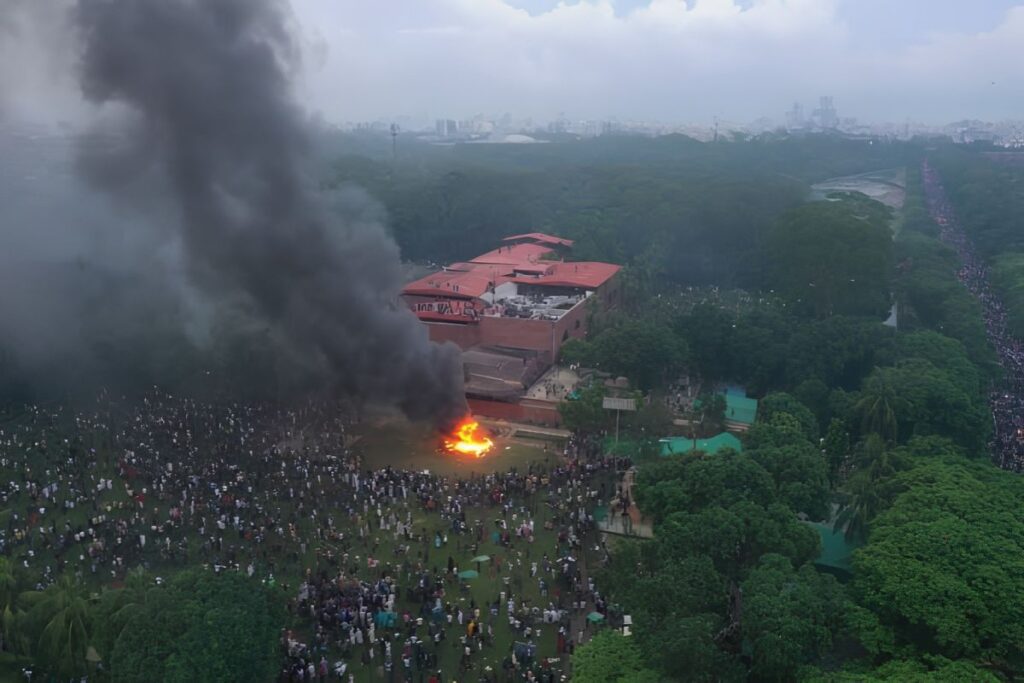
Bangladesh political unrest in 2026 is far smaller than the 2013–2015 blockades and is not shutting down the economy. Police logs count 74 burned vehicles over 12 days, mostly empty and targeted overnight, while Chattogram Port and garment export corridors continue operating without the multi-week freight gridlock that defined past nationwide shutdowns.
According to Bangladesh Police Headquarters and Chittagong Port Authority operational records, the banned Awami League’s November 2026 street disruption operates at less than 15% of the physical and economic paralysis inflicted during the 2013–2015 blockades.
Are Chattogram Port and Freight Corridors Still Operating?
Yes, Bangladesh’s main export corridor between Dhaka’s industrial belt and Chattogram Port has remained open throughout the November 2026 shutdown calls. Unlike the Bangladesh 2013–2015 blockades, when road barricades and firebombings stranded containers at off-dock depots for weeks and caused missed shipping cutoffs, political blockades have not halted port freight this week.
On November 17, 2026, the Chittagong Port Authority (CPA), the state agency managing Bangladesh’s principal seaport, which handles over 90% of the country’s maritime trade, issued a directive extending its suspension of fourfold penal storage rent on imported containers through February 28, 2027. Port officials implemented the extension to reduce clearing costs for importers rather than to clear a blockade backlog.
That operational continuity follows a record fiscal year in which Chattogram Port handled 3.52 million twenty-foot equivalent units (TEUs), standard 20-foot shipping container measurements, alongside 137.74 million tonnes of cargo. The only pause in Chattogram Port operations this week resulted from an internal wage dispute: on November 17, Saif Powertec terminal workers halted work for five hours over unpaid gratuity and service dues before resuming container handling at 11:00 a.m.
How Does November 2026 Arson Compare to the 2013–2015 Blockades?
November 2026 attacks consist mostly of overnight arson against parked vehicles and empty buildings, whereas the 2013–2015 blockades relied on daytime highway barricades and firebombings of moving passenger and cargo traffic. Over the 12-day period ending November 19, 2026, Bangladesh Police Headquarters recorded 74 vehicles set on fire and crude bomb blasts at 74 to 78 locations, alongside damage to three police installations and 18 police vehicles.
By comparison, during 32 days of political blockades in late 2023, the Bangladesh Fire Service and Civil Defence logged 217 burned vehicles, nearly three times the November 2026 12-day pace. Earlier, during the 92-day blockade of early 2015, attackers firebombed hundreds of moving inter-district buses and freight trucks during daytime transit hours.
Local police and bank incident logs from November 2026 show that attacks have clustered around unoccupied targets after midnight. At the ancestral Chattogram home of former interim Chief Adviser Muhammad Yunus on November 18, arsonists ignited old furniture inside a ground-floor room abandoned for more than a decade before patrolling officers extinguished the flames.
Across more than 35 Grameen Bank offices attacked between November 10 and 18, incident logs from Pabna, Pirojpur, and Gazipur districts show attackers pouring petrol on exterior signboards, verandas, or bathroom doors around 3:00 a.m. instead of seizing branches or blocking daytime roads.
How Much Economic Damage Is the November 2026 Shutdown Causing?
Current daily losses from localized bus cancellations and property damage are a small fraction of the $150 million to $200 million (over Tk 1,600 crore) lost per day during peak 2013–2015 blockades, because daytime banking and garment factories remain open. The November 2026 unrest began after exiled former Prime Minister Sheikh Hasina announced plans to return from India in December 2026 and her banned Awami League called a shutdown marking the anniversary of her in-absentia death sentence.
During the 2013–2015 shutdowns, the Centre for Policy Dialogue (CPD), an independent Dhaka economic research institute, and national business chambers documented Tk 50,000 crore in six-month shutdown losses in 2013. In a separate assessment of multi-dimensional losses from hartals (general strikes) and blockades, CPD Distinguished Fellow Debapriya Bhattacharya noted that transport paralysis damages the economy most severely when long-distance freight stalls and global apparel buyers divert orders over missed shipping deadlines.
In November 2026, financial markets and export commerce have stayed active. On November 18, the Dhaka Stock Exchange benchmark DSEX index rose 9 points to close at 5,500 on a daily turnover of Tk 819.9 crore, driven by retail buying and banking shares. While the Bangladesh Road Transport Owners’ Association previously recorded daily revenue drops for Dhaka’s 3,500 city buses during late 2023 blockade fears, falling from Tk 1.58 crore to Tk 32.50 lakh per day, November 2026 incidents have not halted daytime retail or port customs.
Why Does a Smaller Disruption Still Carry High Political Stakes?
Despite causing limited economic damage, the attacks test state security ahead of December 2026 because perpetrators are targeting police stations and state infrastructure. Police Headquarters Assistant Inspector General Kamarum Munira stated on November 19 that perpetrators have targeted Key Point Installations (KPIs), designated critical state facilities such as police stations and power infrastructure, and cited intelligence regarding plans to disrupt road and waterway routes, prompting expanded highway patrols and 63 arrests across 38 cases.
For the banned Awami League, operating under a legal ban, mass arrest drives, and bans on public rallies leave decentralized nocturnal arson as one of the few methods exiled networks can use to project organizational reach without exposing large crowds to detention.
Three concrete operational thresholds determine whether Bangladesh political unrest in 2026 crosses from nocturnal sabotage into a 2015-scale economic blockade:
- Daytime Dhaka–Chattogram highway interdictions: Sustained daytime attacks on moving cargo trucks along the N1 highway that halt container transfers between off-dock depots and Chattogram Port.
- Railway track sabotage: Fishplate removals or fires along major rail corridors, escalating beyond recent nighttime track fires in Rajshahi’s Charghat and Netrokona’s Barhatta, which caused minimal delays, into sustained blockages that halt fuel and freight trains.
- Industrial belt factory closures: Coerced political shutdowns across garment hubs in Gazipur and Ashulia, where separate minimum-wage labor protests prompted temporary closures at 132 to 535 factories on November 18.
Frequently Asked Questions
How does the November 2026 unrest in Bangladesh compare to the 2013–2015 blockades?
According to Bangladesh Police Headquarters and Chittagong Port Authority records, November 2026’s unrest represents less than 15% of the physical and economic disruption seen during the 2013–2015 blockades. Between November 7 and 19, 2026, police logged 74 vehicle fires, mostly targeting parked, empty vehicles overnight, whereas the 2013–2015 blockades featured sustained daytime highway barricades, rail sabotage, and hundreds of firebombed moving buses and trucks.
Is Chattogram Port closed during the November 2026 shutdown in Bangladesh?
No, Chattogram Port and the Dhaka–Chattogram export freight corridor have remained open throughout the November 2026 shutdown calls. The only interruption at the port occurred on November 17, when Saif Powertec terminal workers paused operations for five hours over unpaid gratuity and service dues before resuming container handling at 11:00 a.m.
What was the daily economic loss during Bangladesh’s 2013–2015 blockades versus November 2026?
During the 2013–2015 blockades, the Centre for Policy Dialogue and business chambers estimated losses at $150 million to $200 million (over Tk 1,600 crore) per day due to halted freight and stalled garment exports. In November 2026, losses remain a small fraction of that level because garment factories, daytime retail markets, port customs, and the Dhaka Stock Exchange (which recorded Tk 819.9 crore in turnover on November 18) have continued operating.
What would signal that Bangladesh’s 2026 unrest is escalating into a full economic blockade?
Economists and logistics data point to three concrete triggers: daytime attacks halting cargo trucks on the N1 Dhaka–Chattogram highway, sustained railway track sabotage disrupting freight and fuel trains, and coerced shutdowns of export garment factories in Gazipur and Ashulia.