






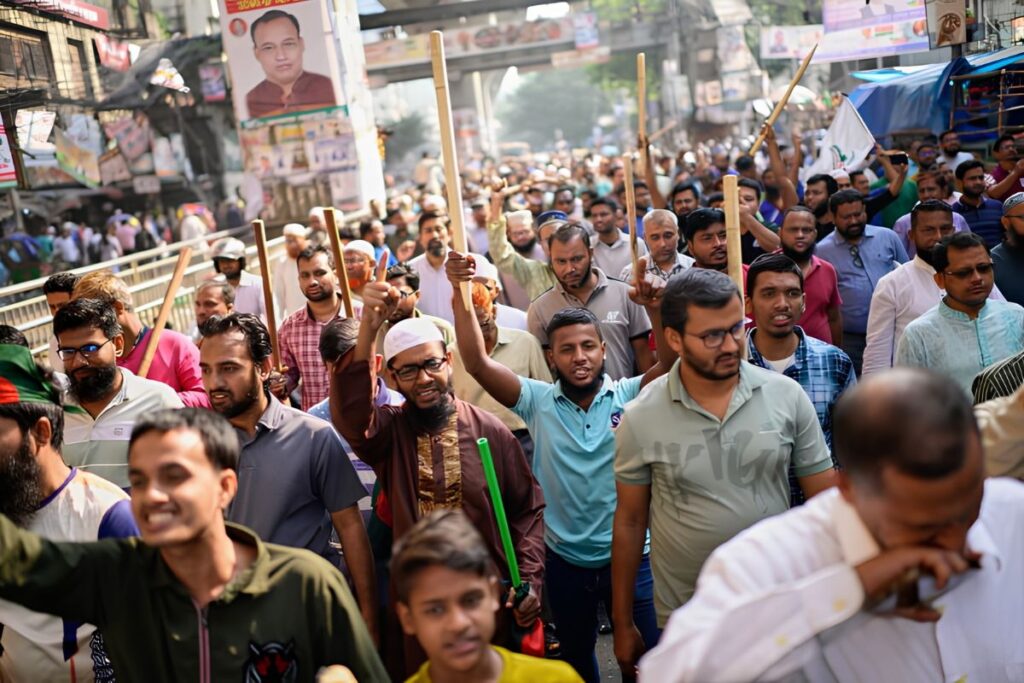
Bangladesh’s student-born National Citizen Party (NCP) opposes the UN’s call to end the Bangladesh Awami League ban because lifting it before tribunal trials conclude would void uprising leaders’ April 2026 legal immunity shield, expose lawmakers to street retaliation, and restore a two-party duopoly that erases their 14-seat parliamentary bloc.
What Happened in the Midnight Fire at MP Nusrat Tabassum’s Home?
Shortly after midnight on November 12, 2026, a fire tore through the ancestral home of National Citizen Party (NCP) Joint Convener and reserved-seat lawmaker Nusrat Tabassum in Bagowan village, Kushtia, an attack NCP lawmakers attribute to political retaliation after a local threat on Facebook. According to parliamentary statements and police briefings reported by bdnews24.com, the blaze gutted seven of the house’s ten rooms and killed two livestock animals.
Tabassum alleged in the Jatiya Sangsad (Bangladesh’s national parliament) and to reporters that individuals linked to the Awami League hurled petrol bombs at the property three hours after a local Bangladesh Chhatra League leader posted a threat on Facebook. Home Minister Salahuddin Ahmed told parliament on November 12 that preliminary police and fire-service findings pointed instead to an electrical short circuit, triggering a floor walkout and protest from NCP lawmakers including Abdul Hannan Masud and party convener Nahid Islam.
“Those who think they can intimidate us will only end up disgracing themselves,” Tabassum said following the incident, as documented in The Daily Star’s parliamentary coverage.
The National Citizen Party, a registered political party founded by the student coordinators who led the July 2024 mass uprising against former Prime Minister Sheikh Hasina, holds six directly elected seats and 14 seats overall when including reserved women’s seats in the 13th Jatiya Sangsad. Without the nationwide party machinery of the ruling Bangladesh Nationalist Party (BNP), these lawmakers face street unrest in November 2026 as a direct physical threat.
Why Does the April 2026 Indemnity Law Fail If the Awami League Returns?
The July Mass Uprising (Protection and Liability Determination) Bill, 2026 fails if the Awami League returns to power because it is an ordinary act of parliament rather than a constitutional bar, meaning a future parliamentary majority could repeal it and prosecute uprising leaders. Ratified on April 8, 2026, alongside a separate statute codifying the Bangladesh Awami League ban, the law is detailed in the Bangladesh Parliament legislative archive.
The July Mass Uprising (Protection and Liability Determination) Bill, 2026 is a parliamentary statute that withdraws all civil and criminal cases filed in domestic Bangladeshi courts against uprising participants for actions between July 1 and August 8, 2024. While barring domestic court filings, the statute preserves the National Human Rights Commission (NHRC) authority to investigate allegations of criminal misuse during the unrest, a framework analyzed in Prothom Alo’s coverage of the April 2026 parliamentary session.
During the April 8 floor debate, NCP lawmaker Hasnat Abdullah criticized the government for passing the liability bill before reconstituting the NHRC under a stalled ordinance. He warned that incomplete institutional safeguards leave the immunity shield vulnerable to political reversal if a re-legalized Awami League regains institutional power.
How Does Election Math Trap Bangladesh’s New Third Force?
Under Bangladesh’s single-member, first-past-the-post voting system, lifting the Bangladesh Awami League ban would restore a traditional vote bank large enough to squeeze the NCP out of the competitive margins it won in February 2026. Certified returns published by the Bangladesh Election Commission from the February 12, 2026 general election show how narrow the NCP’s foothold remains:
- Bangladesh Nationalist Party (BNP): According to the Bangladesh Election Commission, the BNP won 209 of 299 contested general seats (up from zero in the boycotted 2024 vote), securing 37,468,994 votes, or 49.97% of the ballots cast.
- Bangladesh Jamaat-e-Islami: According to the Bangladesh Election Commission, Jamaat-e-Islami emerged as the main parliamentary opposition with 68 directly elected seats.
- National Citizen Party (NCP): According to the Bangladesh Election Commission, the NCP contested 30 constituencies in an electoral alliance with Jamaat-e-Islami and won six directly elected seats, including Dhaka-11, won by 27-year-old convener Nahid Islam, on 2,286,795 votes, or 3.05% of the national total.
Running inside a coalition without the Awami League on the ballot, the NCP captured one-fifth of the 30 seats it contested. The NCP and Jamaat-e-Islami have demanded proportional representation under the July Charter, a post-uprising reform framework, against resistance from the ruling BNP, which benefits from winner-take-all districts.
Why Do the UN Briefing and Dhaka’s Tribunal Rulings Collide?
UN Deputy Spokesman Farhan Haq’s November 10, 2026 call for open political participation collides directly with Dhaka’s April 8, 2026 parliamentary ban and active International Crimes Tribunal death sentences against Sheikh Hasina. Speaking at the United Nations daily press briefing in New York, Haq said that “all political parties and all political personalities should be free to participate” in political activities in Bangladesh, while adding that accountability for past crimes must proceed.
Haq’s answer responded to a reporter’s question about Sheikh Hasina’s supporters ahead of her threatened return from exile in India in December 2026. In Dhaka, parliament suspended the Awami League’s registration and its online, print, and public assembly activities on April 8, 2026, following the November 2025 conviction of Hasina in absentia by the International Crimes Tribunal (ICT) Bangladesh, a domestic war-crimes and crimes-against-humanity court, over the 2024 protest crackdown that killed an estimated 1,400 people, as documented by the UN Office of the High Commissioner for Human Rights (OHCHR).
International legal counsel representing the Awami League, including barristers at Matrix Chambers instructing UN human rights mandate holders, have argued that banning a political party and criminalizing its speech violates Article 25 of the International Covenant on Civil and Political Rights (ICCPR). Independent human rights monitors, including Human Rights Watch, have also cautioned that sweeping legislative immunity for 2024 uprising participants risks creating a two-tier standard of justice.
What Sequence of Reforms Do Student Organizers Demand First?
The NCP’s parliamentary caucus demands final appellate verdicts at the International Crimes Tribunal, proportional-representation reforms under the July Charter, and prosecutions for November’s street attacks before parliament debates restoring the Awami League’s legal status. Inside parliament, the NCP is neither aligned with the UN’s inclusion framing nor operating in lockstep with Prime Minister Tarique Rahman’s BNP cabinet.
During the November 12 session, Nahid Islam directly challenged Home Minister Salahuddin Ahmed over the government’s handling of crude bomb blasts at Dhaka University and the fire at Tabassum’s home. Islam questioned whether the cabinet was failing to contain political sabotage while enforcing the statutory ban outlined in the UK Home Office Country Policy and Information Note on Bangladesh.
Whether Prime Minister Tarique Rahman’s cabinet holds that transition sequence under international diplomatic pressure, or trades concessions on party registration ahead of local government elections, will determine if Bangladesh’s uprising generation survives as an independent parliamentary force.
Frequently Asked Questions
Why is Bangladesh’s National Citizen Party against lifting the Awami League ban?
National Citizen Party (NCP) lawmakers oppose lifting the April 2026 Bangladesh Awami League ban before tribunal trials conclude because an Awami League return to parliament could repeal the April 2026 indemnity law protecting 2024 uprising leaders from domestic prosecution. The NCP also warns that an immediate return to two-party voting would wipe out its 14-seat parliamentary bloc.
Does the April 2026 indemnity law permanently protect 2024 uprising leaders in Bangladesh?
No. The July Mass Uprising (Protection and Liability Determination) Bill, 2026 withdraws domestic civil and criminal cases for actions between July 1 and August 8, 2024, but it is an ordinary parliamentary act rather than a constitutional bar, and it still permits National Human Rights Commission investigations into alleged criminal misuse.
How many parliamentary seats did the student-led National Citizen Party win in 2026?
According to the Bangladesh Election Commission, the National Citizen Party won six directly elected seats out of 30 contested in the February 12, 2026 general election on 2,286,795 votes (3.05% of the national vote), bringing its total to 14 seats in the 13th Jatiya Sangsad after reserved women’s seats were allocated.
What did the UN say about political participation in Bangladesh in November 2026?
At a November 10, 2026 daily press briefing in New York, UN Deputy Spokesman Farhan Haq stated that “all political parties and all political personalities should be free to participate” in political activities in Bangladesh, while adding that accountability for past crimes must continue.