






Analyzing Supreme Court judges by state reveals a deep geographical imbalance. India’s expanded 37-judge Supreme Court concentrates appellate power in a few regional hubs, leaving nearly a third of the country’s state High Courts entirely unrepresented at the apex level.
Which High Courts Dominate the Supreme Court?
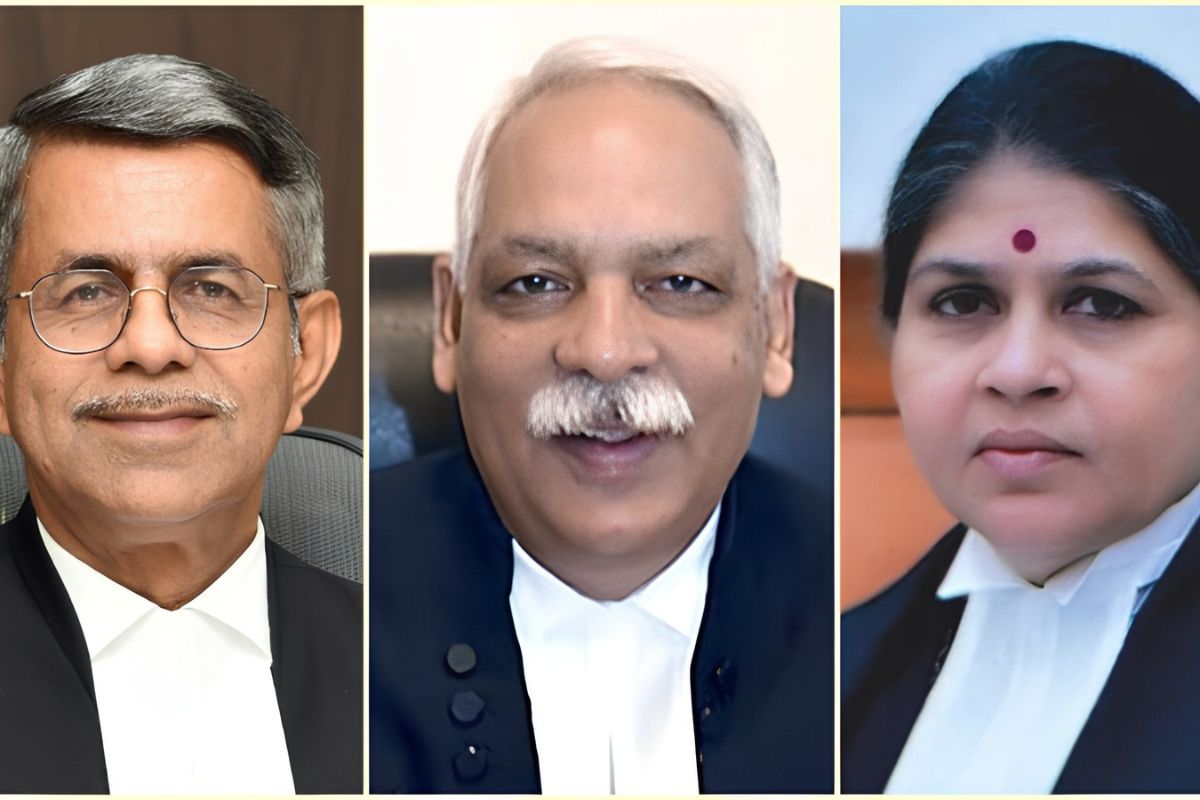
The Allahabad High Court holds a dominant share of the bench, while courts in Delhi and Bombay also maintain disproportionate representation. The recent swearing-in of three new justices shifted the geographical center of gravity at the apex court, as two of the three new appointees hail from Uttar Pradesh.
This brings Allahabad High Court representation on the Supreme Court bench to four.
According to the Supreme Court registry’s official profiles, 12 of the 37 sitting apex judges trace their origins to just three High Courts: Allahabad, Delhi, and Bombay. The remaining seats are distributed thinly across the rest of the country.
How Does the 37-Judge Milestone Affect the Court?
The oaths administered to Justices Sunita Agarwal, Devendra Kumar Upadhyaya, and Aparesh Kumar Singh brought the working strength of the Supreme Court of India to 37. The court now sits one judge short of its absolute limit.
The Supreme Court (Number of Judges) Amendment Act, 2026 recently increased the Supreme Court’s sanctioned strength, the legally permitted maximum number of judges set by Parliament, from 34 to 38.
Coverage of these appointments focused largely on headcount and demographics, noting that elevating Justice Agarwal brings the number of women on the bench to three out of 37. But the selection process alters the regional makeup of the court just as much as its gender balance.
Which State High Courts Have Zero Representation?
Cross-referencing the parent High Courts of the 37 sitting judges against Department of Justice records reveals that eight state High Courts currently have zero representation at the apex level. While courts in Uttar Pradesh and Maharashtra maintain multiple seats, a large bloc of states has no voice at all.
The group of unrepresented High Courts includes Orissa, Jammu and Kashmir and Ladakh, and Meghalaya. Several of these courts have not seen an elevation in over five years.
States relying on these courts lack a direct representative for local constitutional issues and regional legal nuances in the highest appellate body.
Does High Court Caseload Justify the Geographic Tilt?
The Supreme Court Collegium, a panel comprising the Chief Justice of India and senior-most judges that decides judicial appointments, prioritizes merit and seniority over strict regional quotas.
A structural defense exists for Allahabad’s dominance: it is India’s largest High Court. Allahabad operates with a sanctioned strength of 160 judges, compared to a court like Sikkim, which operates with three.
Case volume tells a similar story, though the numerical ratios reveal disparities. National Judicial Data Grid records show the Allahabad High Court handles over one million active cases. Dividing this caseload by its four Supreme Court representatives yields a ratio of one apex judge for every 250,000 pending state cases.
Compare this to an unrepresented court like Orissa. According to the data grid, it carries a burden of roughly 170,000 active cases but has zero judges in New Delhi.
The math varies among represented courts. The Delhi High Court has one Supreme Court judge for roughly every 25,000 active cases, giving it a stronger relative voice than heavier-burdened states. The court is larger than it has ever been, yet its geographic footprint remains tightly concentrated.
Frequently Asked Questions
How many judges are currently in the Supreme Court of India? The Supreme Court of India currently operates with a working strength of 37 judges. The Supreme Court sanctioned strength was recently increased to a maximum of 38 judges by Parliament.
Which state High Court has the most judges in the Supreme Court? The Allahabad High Court holds the highest representation. It is one of three High Courts—alongside Delhi and Bombay—that together account for nearly a third of all sitting judges on the apex court bench.
Are all Indian states represented in the Supreme Court? No. Department of Justice records indicate that eight of India’s 25 state High Courts currently have zero judges elevated to the Supreme Court. Regions relying on these courts lack direct representation on the 37-judge bench.