






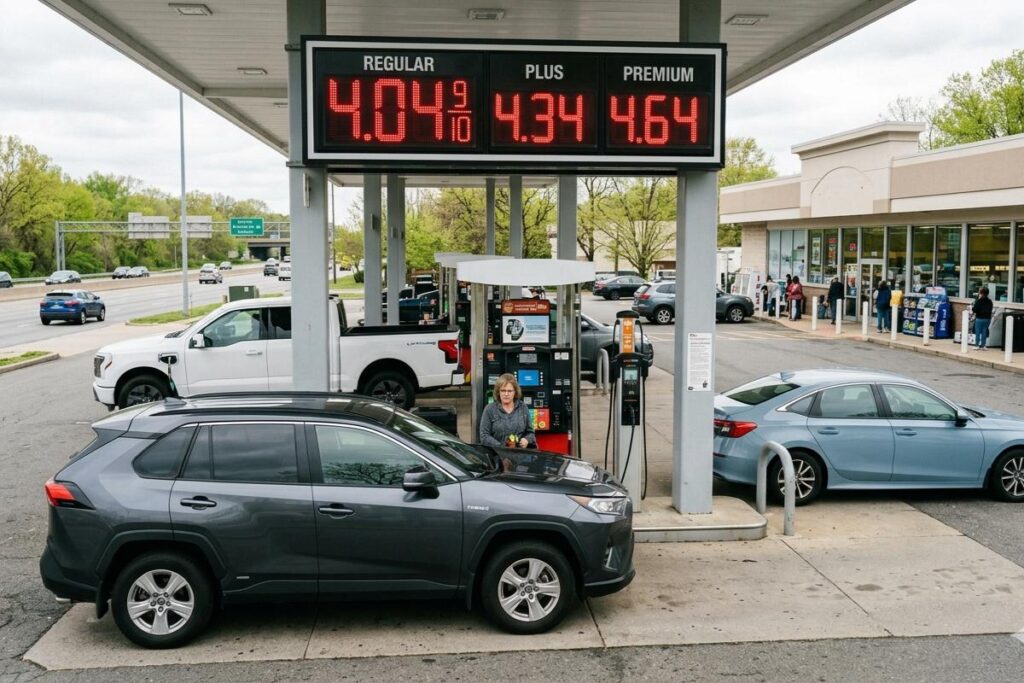
The average price of a gallon of regular unleaded gas in the US this week was $4.04. This number is still stubbornly separate from the recent drop in violence in the Middle East. The fuel crisis of 2026 broke the global energy supply chain, but a shaky ceasefire stopped fighting between the two sides. Drivers who thought they would get a quick “peace dividend” at the pump are now finding that the market has changed a lot.
Rising energy costs are the main reason why the economy is getting more expensive. Gas prices stay high, which means that moving things costs a lot of money. This trend makes the changes in interest rates that the Federal Reserve made earlier this year pointless. Households that want to stay afloat now need to know why the price won’t go down.
There is a “war premium” that hasn’t gone away, which is why the price gap is so big right now. Insurance rates for the Strait of Hormuz have gone up five times since January, even though tankers are starting to move again. The price of every barrel of crude oil that enters the country includes these costs.
The New Normal: Why Gas Prices Will Stay the Same
Prices go up easily because of geopolitics, but they don’t go down. Despite the reduced physical threats to oil fields, the “Hormuz Premium” for 2026 remains a significant concern. Shipping companies are paying the most for protection ever, and they are passing these costs on to their customers.
The price of crude oil has dropped from its wartime highs, but it is still costly to move. Why aren’t gas prices dropping even though the fighting has stopped? Gas prices are still high because maritime insurance premiums are at an all-time high, US refinery capacity is down, and oil marketing companies are trying to make up for money they lost when prices were frozen. These structural factors create a “price floor” that stops retail prices from falling as quickly as crude oil market prices.
Refinery Capacity and Market Recovery
The second, more long-term issue is how much US refineries can handle. Three big refineries in the US have either closed or switched to biofuels since the start of 2025. With this change, the country could use less gas every day. The system doesn’t have the “surge capacity” it needs to keep prices down when demand goes up in the summer.
It’s important to remember that Oil Marketing Companies (OMCs) are now in a “recoupment phase.” To keep the peace during the price freeze in March 2026, many retail chains had to lose money. Now that the freeze is over, these companies are keeping prices higher for longer to fix their balance sheets. This is what economists call “rockets and feathers”: prices go up quickly but slowly go down.
The Regional Lottery: A Map That Is Not the Same for Everyone
A driver’s price changes a lot depending on how close they are to the Gulf Coast. Prices dropped to $3.40 in some places in Texas and Oklahoma, where there is a lot of infrastructure for extracting and refining oil. Drivers in Washington and California, on the other hand, have to pay $5.50 or more. These states on the West Coast are like “energy islands” because they don’t get much energy from the pipeline networks in the Midwest.
Logistics issues have made this regional divide even worse. A big problem with a pipeline in the Pacific Northwest earlier this month made it more important to use rail and truck transport. It costs a lot more to move things this way than it does to use a pipeline. The West Coast will have to pay an extra fee for logistics that the rest of the country won’t have to pay until workers are done fixing the infrastructure.
Tactical Saving: How to Lower Your Gas Costs
The 2026 fuel crisis is too big for a 5-cent discount app to help. You need to start “tactical driving” to save money. This method treats fuel as a valuable resource instead of just a basic need. [Link to: 2026 Vehicle Maintenance Guide]
The Energy Information Administration (EIA) says that driving aggressively can lower your gas mileage by 15% to 30%. The most important thing a driver can control is still speed. Most cars get the best gas mileage when they go about 55 mph. When a car goes faster than 65 mph, the air resistance gets a lot worse.
The Best Ways to Save Money Right Now:
- Lower Speeds on the Highway: If you drive at 65 mph instead of 75 mph, you could save up to $0.50 per gallon of gas.
- Stacking Loyalty: Check to see if the prices at warehouse clubs are the same as those of high-yield fuel credit cards.
- Refueling with a plan: Prices fluctuate significantly during the week, so monitor your area’s trends to prevent significant weekend price increases.
How to Use Loyalty Stacking to Fight Inflation
The best way to handle your money is to “stack” your loyalty points. There are three levels of discounts that are used at the same time. Join a warehouse club first. They usually charge 15 to 25 cents less for gas than the average price in your area.
Second, get a credit card that gives you 5% back on gas purchases. Finally, establish a loyalty program with your primary grocery store. By combining these layers, a driver can reduce the average cost from $4.04 to approximately $3.55. You need to plan ahead more, but these long-term savings are the only way to get ahead in a market that isn’t moving.
The Grocery Connection: The Secret Price of Gas
High gas prices don’t just make it harder to get to work; they also cause a second problem in the food supply chain. Farming these days uses a lot of fuel. Natural gas is what makes nitrogen-based fertilizers and diesel fuels for tractors.
As the fuel crisis goes on, the “input costs” for the fall harvest are going up. Because shipping costs are going up, stores are already changing the prices of meat, fruits, and vegetables. Driving a single semi-truck full of goods across the country now costs about $1,200 more in gas than it did two years ago. People should expect to pay more for groceries in the next few months.
Should You Switch to Electric Cars or Hybrids?
The statistics regarding car ownership have become excessive. In the early 2020s, it took about seven years for a hybrid or electric car to make up for its cost. That window has gotten smaller for people who drive a lot. In the past, it was about four years. Now, it’s been about three years. [Link Suggestion: EIA Fuel Outlook 2026]
The internal combustion engine could go from being a common tool to a luxury item if the “Hormuz Premium” stays around. People who want to buy a used hybrid should pay attention to the market. Volume has gone up 12% in the past three months because families are moving away from big SUVs and trucks that only run on gas.
If the consumer waits for prices to drop, they will not be successful. It will come when you change your strategy to deal with living in a place where energy costs are high. Check OPEC’s production reports for July. If they don’t announce a big increase in production, the $4 floor could stay in place until 2027.
2026 Fuel Prices: Questions That Are Often Asked
Q: Why does gas cost more in the West than in the South? A: The West Coast doesn’t have as many pipelines as the Gulf Coast, so it has “energy islands” that need more expensive rail and truck transport.
Q: Will gas prices drop back down to $3.00 soon? A: Current estimates put the floor at $4.00 because there aren’t as many refineries in the US, and shipping insurance costs are high around the world.
Persistent energy price floors accelerate investment into alternative energy matrices and clean tech; see our deep dives into India’s expanding solar manufacturing ecosystem and US energy and trade policy dynamics.