






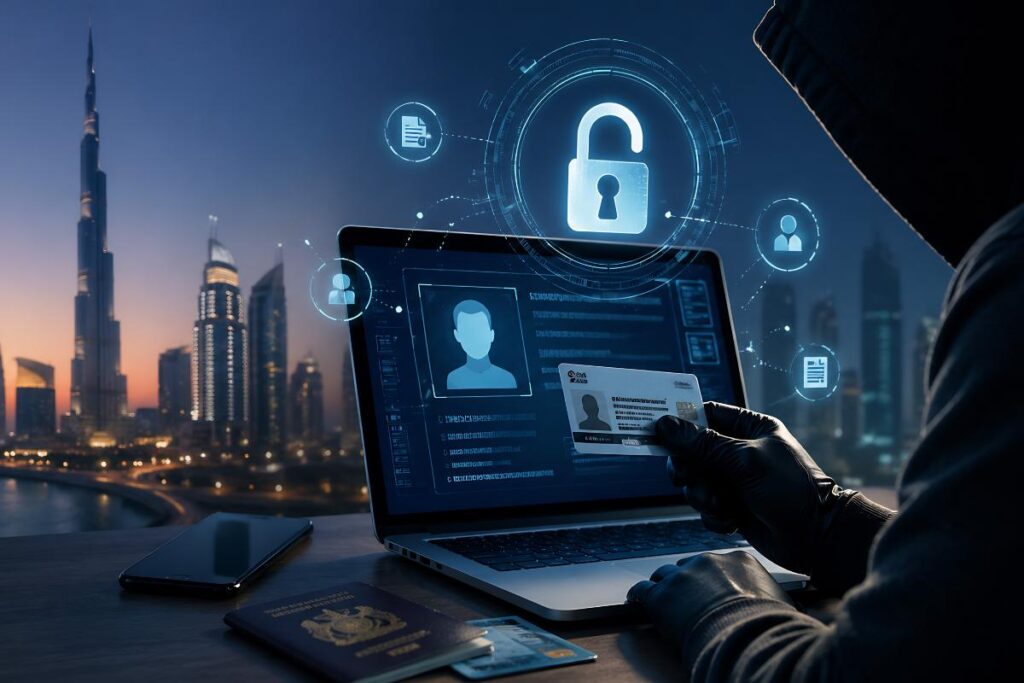
With a rise in cyber fraud, the risks of digital identity theft in the UAE have become more pronounced, prompting a new warning from the UAE Cybersecurity Council. Officials say that a rise in phishing scams, SIM swap fraud, and account takeovers is targeting residents. These threats now go after complete digital identities, not just passwords.
The warning comes at a critical moment as a result. The UAE’s digital ecosystem continues to grow in banking, telecom, and government services. But this rapid growth has increased the vulnerability to cybercrime.
Thus, identity theft has become a serious problem in cybersecurity. Within minutes, a stolen identity can be used to open financial accounts and access sensitive data.
What the UAE Cybersecurity Council Warning Signifies
Short answer: The UAE Cybersecurity Council has warned of an increase in digital identity theft through phishing attacks, SIM swap fraud, and stolen personal data. Threats that allow criminals to access financial accounts and services. The use of digital technologies has created new risks for people and companies.
Officials say there has been a definite uptick in phishing scams targeting residents. These scams usually pretend to be authentic institutions and ask for OTPs or login credentials.
Most notably, attackers are now using localized messaging and realistic website replicas. Victims think they are dealing with real services.
So, officials emphasize prevention. Residents are urged to check links and not to share sensitive information. But there are also systemic vulnerabilities.
Password Theft to Identity Hijacking
Understanding Digital Identity Theft in the UAE
Digital identity theft is no longer just about stealing passwords. Stolen data is now used by attackers to build complete identity profiles.
Once compiled, these profiles allow impersonation on multiple platforms. A hacked phone number can mean password resets and access to your account.
For instance, attackers can steal OTPs through SIM swap fraud. This bypasses conventional security measures of mobile verification.
Banks have added multi-factor authentication. Cybercriminals, though, keep adapting, looking for weak spots to exploit.
Growing Risks of Digital Identity Theft in the UAE
Growth of Digital Services
The UAE’s digital-first strategy has fast-tracked online adoption. Payments, ID, and services are now run by mobile apps.
This approach means each new platform creates more exposure to cyber threats.
Data breaches and the dark web marketplaces
Underground platforms around the world steal and trade personal data. Attackers pair datasets to craft targeted scams.
These scams will often seem to be real, so it can be tricky to detect them.
AI-Powered Cybercrime
Cybercriminals’ tactics were turbocharged by artificial intelligence. Attackers can generate believable messages and copy communication styles.
This scales up the size and effectiveness of phishing attacks that UAE residents are exposed to
Systemic Flaws Causing Identity Theft
Sim Swap Frauds and Telecom Weaknesses
Telecom systems remain a major vulnerability. SIM swap fraud takes advantage of verification weaknesses using social engineering.
Controls have gotten better, but attackers still find their way in.
Gaps in Platform Accountability
Banks, telecom providers, and platforms share security responsibility. This fragmentation creates exploitable gaps.
A breach in one system can impact others.
System design and user awareness
Awareness campaigns are useful, but system design matters as well. Heavy dependence on OTP-based systems leads to predictable risks.
Experts recommend layered authentication and behavioral monitoring.
Who is at Greatest Risk
Certain groups are more vulnerable. Older users may have trouble spotting phishing attacks. Mobile banking systems are quite popular with migrant workers.
Small businesses are still vulnerable. Many don’t have a strong cybersecurity infrastructure.
This situation means attackers often do not go after high-value individuals but instead go after accessibility.
Data and Reporting Gaps
Official data only reflects reported cases. “However, underreporting is still a big problem.
Victims may be hesitant to report incidents because of stigma or uncertainty. At the same time, institutions sometimes resolve cases internally.
As a result, it is challenging to gauge the true scale of the cyber fraud that the UAE authorities are dealing with.
UAE Cybercrime Trends vs Global Cybercrime Trends
Identity theft is one of the fastest-growing cyber threats in the world. Similar trends are occurring in the UAE, where there is a rapid adoption of digital technology.
But other Gulf countries report similar risks. The more advanced digital systems can increase efficiency and exposure.
But the UAE authorities are proactive in their oversight through advisories and coordination.
What’s Next for Cybersecurity Policy
Regulators are expected to tighten up on the identity verification measures. Controls may be tightened on the telecom and banking sectors.
Simultaneously, emerging technologies such as biometric authentication and behavioral analytics are gaining ground.
At the same time, privacy issues persist. More monitoring is more security, but it also raises data protection issues.
How To Avoid Having Your Digital Identity Stolen
Here are steps residents can take to mitigate risk:
- Never give out OTP or verification codes
- Check website URLs before submitting data
- Enable two-factor authentication
- Monitor bank and telecom warnings
- Report suspicious activity today
UAE Digital Identity Theft Risks FAQ
What is Identity Theft Online?
Digital identity theft is when criminals steal personal information to access accounts or impersonate people online.
The UAE has a high rate of cyber fraud.
Authorities say they are seeing more phishing scams and identity theft attempts as more people move to digital services.
What is SIM-swap fraud?
SIM swap fraud enables attackers to intercept OTPs by transferring a victim’s phone number to another SIM card.
Conclusion: A Growing Cybersecurity Threat
UAE digital identity theft risks soar along with digital transformation. “The more connected the systems, the more complex the cyber threats.
Better coordination between regulators, institutions, and users will shape future defenses. The success of these measures will depend on how well systems can adapt to changing cyber risks.