






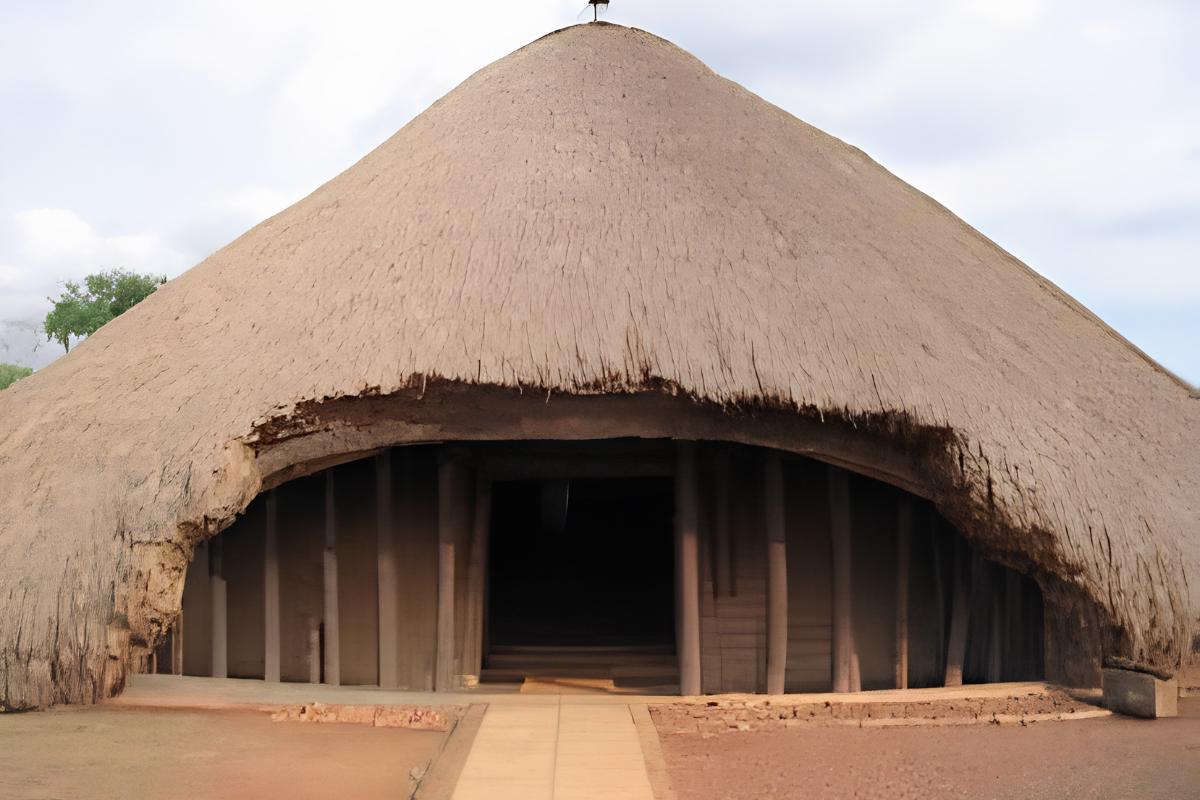
Thick smoke no longer hangs over the hills of Kampala. Instead, the scent of fresh spear grass and woven palm fronds signals the completion of a sixteen-year restoration. The Kasubi Tombs, the central cathedral of the Buganda Kingdom, officially reopened this month. This event marks the end of a long period of mourning following a devastating arson attack in 2010. While digital headlines pivot toward sensationalist claims of “stargates” and “invisible realms,” the reality involves a sophisticated intersection of historical reclamation and Indigenous spiritualism.
This restoration represents a physical re-emergence of a cultural gateway. It links modern Uganda to the spiritual hierarchy of the Buganda and the semi-mythical Bacwezi dynasty. For millions of followers, these sites are not stagnant monuments. They are active intersections where the physical and spiritual worlds overlap. This reopening coincides with a continental movement toward reclaiming indigenous identities. As a result, the ancient Uganda heritage sites have become a focal point for local devotion and international interest.
The Architecture of the Unseen
Constructing the Muzibu-Azaala-Mpanga required a rejection of modern industrial techniques. Builders followed a strictly regulated traditional architectural code. Standing nearly 25 feet tall, the structure utilizes a complex internal forest of 52 wooden pillars. These pillars represent the 52 clans of the Buganda people. A massive, domed roof thatched with layers of dry grass supports the pillars. This technique allows the building to “breathe” while maintaining a cool internal temperature. Artisans avoided using metal nails, relying instead on intricate lashings of fiber and bark cloth.
Bark-cloth curtains partition off a “sacred forest” or kibira inside the dim interior. This area serves as a metaphorical portal where the four fallen kings, or Kabakas, reside in a state of spiritual transition. The design deliberately manipulates light and sound to create an atmosphere of liminality. Visitors often report a profound sense of stillness. Traditionalists attribute this to the presence of the ancestors. Notably, UNESCO technicians worked alongside Ganda artisans to ensure restoration met international preservation standards without violating strict spiritual taboos.
Significance of the Tombs
- Spiritual Heart: The Kasubi Tombs serve as the spiritual and political heart of the Buganda Kingdom.
- Royal Resting Place: They house the remains of four former kings and act as a major center for indigenous religious practices.
- Cultural Link: Their reconstruction restores a vital link between Uganda’s pre-colonial history and its modern cultural identity.
Ancient Uganda Heritage Sites: History vs. Mystery
To understand the “invisible realm” mentioned in viral discourse, one must look west to the Nakayima Tree in Mubende. This site is central to the cult of the Bacwezi, a dynasty that ruled the Empire of Kitara between the 14th and 16th centuries. Unlike typical historical rulers, oral tradition describes the Bacwezi as “demigods” with supernatural abilities. Legend states they did not die but simply “disappeared” into lakes and craters. This narrative fuels modern speculation about physical portals.
Archaeological evidence suggests the Bacwezi were a pastoralist elite. They introduced sophisticated earthworks, long-horned cattle, and iron smelting to the region. Their sudden departure from the historical record likely resulted from environmental collapse or succession wars. However, in the Ganda worldview, the Bacwezi remain guardians of the natural order. The “invisible realm” is not a separate physical dimension. Instead, it is a spiritual plane that exists parallel to our own.
The Politics of Sacred Space
The reopening of these sites is linked to the complex relationship between the Buganda Kingdom and the central government. The 2010 fire occurred during a period of high political tension. As a result, restoring the site was a multi-million-dollar endeavor requiring deep cooperation. Consequently, the “portal” is also a political one. It facilitates a delicate dialogue between a traditional monarchy and a modern republic.
Securing the site for the future involved installing advanced fire suppression systems. These systems remain invisible to the naked eye to preserve the aesthetic of the kibira. This blend of high-tech safety and ancient tradition reflects Uganda’s struggle to modernize without losing its cultural anchor. Government officials view the reopening as a catalyst for cultural tourism in Uganda. However, for the Buganda, the priority remains the restoration of spiritual protection for the nation.
The Modern Pilgrim: Afrofuturism and Ancient Sites
A notable shift in visitor demographics has emerged during the restoration years. While traditional sites were once the domain of elders, a new generation of tech-savvy Ugandans is reclaiming these spaces. This movement, often called “Afrofuturism,” seeks indigenous answers to modern questions. Young artists and activists visit Kasubi and Nakayima to study pre-colonial governance and environmental ethics.
Digital spaces have played a dual role in this resurgence:
- Information vs. Misinformation: Social media has spread misinformation about “stargates,” but it has also allowed for the documentation of oral histories.
- Digital Archives: Digital archives now house recordings of traditional chants.
- Cultural Synthesis: This process ensures that the linguistic keys to the “invisible realm” remain for posterity. This synthesis of the ancient and the digital suggests that the “portal” is moving from a physical location to a conceptual space.
Future Implications for Heritage and Identity
The successful restoration of the Kasubi Tombs provides a blueprint for other African nations. It proves that local community involvement is more critical than large-scale foreign capital. With the doors wide open, the world will closely observe how the Buganda Kingdom navigates global curiosity. They must balance tourism with the sanctity of their spiritual practices.
In the coming months, observers should watch for the escalation of the “repatriation” debate. The reopening of a world-class heritage site weakens arguments that African nations cannot house their artifacts. If Uganda can restore Kasubi to UNESCO standards, the pressure on Western museums to return stolen royal regalia will intensify. Ultimately, the Kasubi Tombs represent a doorway to a deeper understanding of human history.
Frequently Asked Questions
- Are the Kasubi Tombs open to the public?
Yes, the tombs officially reopened in 2026 following a sixteen-year restoration project. Visitors can tour the grounds, but traditional guardians restrict access to certain sacred areas. - Who were the Bacwezi people?
The Bacwezi ruled the Empire of Kitara in the 14th and 15th centuries. They are credited with introducing iron smelting and centralized governance to the Great Lakes region of Africa. - Why did the Kasubi Tombs burn down?
The main building was destroyed by an arson attack in March 2010. The exact perpetrators were never identified, leading to significant political and social unrest at the time.