






What Exactly Went Wrong Between RBI and Paytm Payments Bank?
The Reserve Bank of India has issued a regulatory order that has severely restricted the operations of Paytm Payments Bank, freezing a key part of India’s digital payments ecosystem. The Reserve Bank of India (RBI) has cancelled the license of Paytm Payments Bank for core banking services, thus barring the bank from accepting new deposits, top-ups, or credit transactions.
The move followed what the Reserve Bank of India (RBI) termed persistent non-compliance and supervisory concerns. Customers can still withdraw or spend their existing balance. But the payments bank cannot take new funds.
Consequently, One97 Communications has begun shifting services to partner banks to maintain continuity on the Paytm app. The announcement comes as a sign of worry for investors, with shares in NSE: PAYTM falling sharply.
Why was Paytm Payments Bank’s license cancelled by the RBI
Direct Answer (Answer Box):
The RBI cancelled the Paytm Payments Bank license following multiple compliance failures, including issues with KYC processes, data governance, and regulatory oversight. The move bars the bank from accepting new deposits but allows users to withdraw existing funds, implying tighter regulation in India’s fintech industry.
The RBI’s move comes at a time when digital payments have become a critical infrastructure in India. Paytm was the first mover in wallet-based payments, but the ecosystem has shifted to bank-linked payments.
Meanwhile, the Unified Payments Interface (UPI) is now the most preferred mode of transaction, with billions of transactions happening every month. It moves away from wallets and puts more scrutiny on institutions holding the deposits.
The central bank’s move is significant because it shows that size does not mean less regulation. The fintech platform has to meet the same compliance requirements as the bank.
The Compliance Lapse Behind the RBI’s Action
KYC and Data Governance Challenges
Paytm Payments Bank has come under regulatory scrutiny for its management of Know Your Customer (KYC) norms. These rules are designed to connect accounts to verified identities and mitigate financial risks.
- Regulators reportedly found a small group of ID credentials linked to several accounts.
- This raised concerns about verification integrity and possible misuse.
The RBI has not revealed all the details, but the language points to structural compliance gaps and not isolated lapses.
Operational and Governance Issues
Payments Bank’s governance practices were also examined. The relationship between Paytm Payments Bank and its parent company raised questions about oversight and independence.
- Payment banks can hold deposits but can’t lend and will be under stringent norms.
- Any departure from this framework raises the regulatory risk.
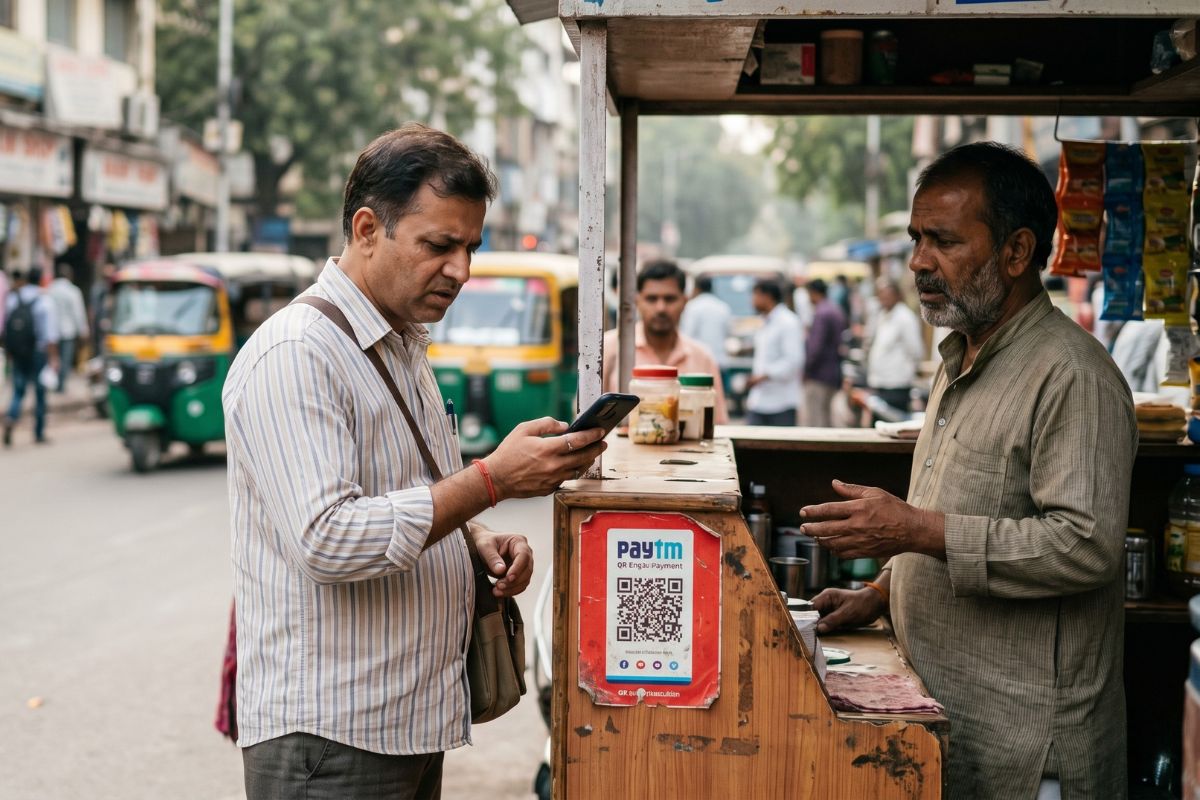
Effect on Paytm Wallet Users & Merchants
What You Can Do Now
- The existing balance in their wallet is still visible to users.
- Withdrawals still allowed.
- But the addition of money or new funds to the wallet has stopped.
This situation is resulting in a shift in users toward UPI-linked bank accounts for daily transactions. The Paytm app still works, but it is becoming increasingly dependent on partner banks.
Merchant Level Effects
- The small traders are the worst hit.
- The reasons many people turned to wallet payments were fast settlement and ease of use.
However, larger businesses already use multiple payment systems. Their activities continue with little disturbance.
Is This the End of Paytm Wallet and Digital Wallets?
Wallet-based payments have been on the decline for years. UPI lets you transfer directly from your bank account without preloading money; it is more convenient.
Industry data shows that UPI has now overtaken retail digital transactions. As a result, wallet use has dropped.
Hence, the RBI’s move is pushing an already existing trend rather than creating a new one. Wallets will still be there, but their role is decreasing in the larger ecosystem.
Who Will Benefit and Who Will Suffer From the RBI’s Move?
Winners of the Fintech Ecosystem
- User migration may give a fillip to competing platforms such as PhonePe and Google Pay.
- Both are heavily reliant on UPI and less bound by wallets.
Transaction volumes and customer engagement also benefit Paytm’s partner banks.
Paytm’s Strategic Stance
Paytm enjoys a massive user base and enjoys strong brand recognition. Its strategy now is to be a technology platform, not a bank.
The company said the disruption to users will be minimal. However, analysts are divided on the long-term implications.
Users and Investors
- Users will see temporary changes, but can still access core services.
- For investors, the focus is on how the regulatory action will impact Paytm’s revenue model.
Implications for Fintech Regulation in India
The RBI move is a clear message to the fintech industry. As platforms grow, compliance standards will get stricter.
Regulators globally are tightening their grip on fintech firms that handle financial data and transactions. India mirrors that trend in tougher enforcement.
Data integrity has become a central issue. Platforms with large user bases must have accurate verification and secure systems.
What is the future of Paytm and the fintech industry?
The success of Paytm will depend on how well it can make the transition to a partner-bank model. Keeping the trust of users will be essential.
Meanwhile, analysts expect fintech firms to increase investment in compliance systems and governance frameworks. Product design and operations will be driven by regulatory expectations.
UPI’s dominance is likely to grow further. This means that digital payments in India will be more bank-centric and interoperable.
FAQs: Cancellation of Paytm Payments Bank’s License
Why did RBI cancel the license of Paytm Payments Bank?
The license was cancelled by the RBI for persistent non-compliance, especially on the KYC and governance fronts.
Does the Paytm wallet work now?
Yes, users can withdraw funds and utilize their existing balances. But they can’t add new money to the wallet.
Is Paytm going to shut down?
No, Paytm is still working with partnerships with banks and supporting UPI-based transactions.