






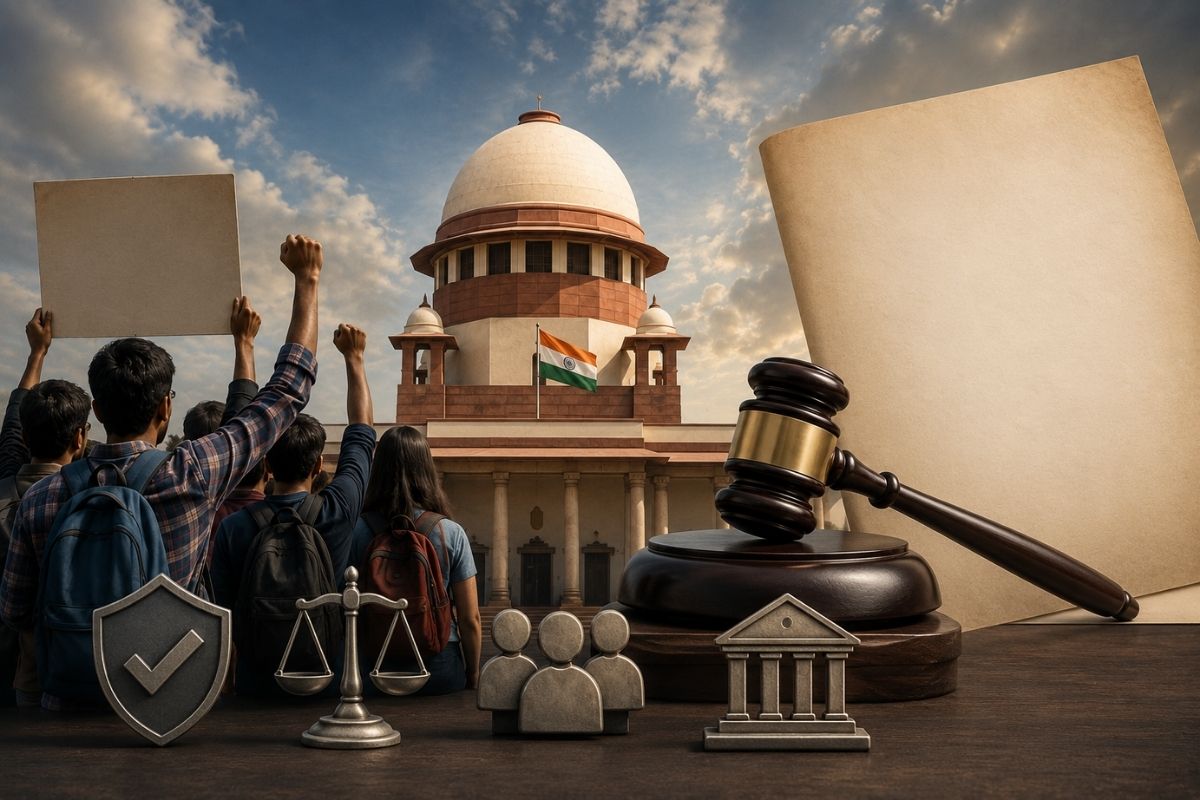
The Supreme Court of India cancelling First Information Reports (FIRs) against student protesters does not refund their legal fees, reverse university suspensions, or restore lost job offers. Students who spent weeks under active investigation remain responsible for their bail and advocate costs, while internal academic disciplinary boards and corporate human resources departments require separate reinstatement processes.
Do Students Get Refunds for Protest Legal Fees?
Between July 20 and September 1, protesters named in police reports incurred immediate, non-recoverable expenses. Based on itemised legal billing receipts and court deposit slips, the average financial outlay ran between ₹25,000 and ₹60,000 per student.
These funds covered surety bail bonds, urgent High Court or magistrate filings, and travel between police jurisdictions. The judicial order closing the cases under Article 142, a constitutional provision allowing the Supreme Court to pass any decree necessary to do complete justice, contains no provision for state reimbursement of private legal defence costs.
Law enforcement officials maintain the initial charges followed statutory requirements. Police were legally obligated under the Criminal Procedure Code to register an FIR, a formal police document setting the criminal justice process in motion, during the public order incidents. Authorities emphasise that maintaining public order requires immediate deterrence regardless of future judicial outcomes.
Will Universities Automatically Reverse Suspensions?
Academic institutions applied their own internal statutes when students were initially charged, and these disciplinary actions remain active. At least three major public universities lack automatic clauses to revoke internal penalties based on external court quashings.
Affected students must wait for separate hearings before a proctorial board, an internal university disciplinary committee, to clear their administrative records. Until these hearings occur, penalties such as withheld degrees, blocked exam registrations, and suspended campus access remain in effect.
University administrations distinguish between criminal guilt and campus conduct. Internal disciplinary autonomy evaluates violations of institutional codes. These operate independently of criminal courts to ensure campus safety and order.
Can Students Recover Rescinded Job Offers?
The 40-day window of active police investigations coincided with the corporate hiring cycle in July and August. Disclosures of pending FIRs in initial background screening checks triggered immediate job offer rescissions for final-year students.
Employers do not retroactively reinstate these withdrawn placements following the Supreme Court’s intervention. The Court barred states from registering fresh cases but could not compel private corporate action.
Human resources departments cite enterprise risk management policies. They explain that regulatory compliance standards mandate pausing or revoking offers for candidates with open criminal proceedings during onboarding.
Why Does Article 142 Leave Students with Lingering Hurdles?
The Supreme Court utilised Article 142 of the Constitution to close the criminal dockets against the protesters. That jurisdiction nullifies the ongoing prosecution, but it does not extend to civil or administrative restitution.
Victims of subsequently quashed FIRs possess no statutory mechanism to claim financial compensation from the state without filing independent civil tort suits for malicious prosecution. While the Delhi Police retained the right to pursue a single FIR against 2,873 individuals with serious criminal antecedents, the thousands of cleared students receive only a closed file, not financial restitution.
Historical mass-protest quashings demonstrate a procedural lag between court orders and database updates. Following the 2019 anti-CAA and 2020–2021 farm law protests, individuals waited months to clear bureaucratic hurdles despite government-backed FIR closures.
Local Special Branch databases often take 6 to 18 months to update a citizen’s status to reflect a quashed FIR, according to Right to Information (RTI) queries on police verification update cycles. During this period, Jantar Mantar protesters and other cleared students face continued rejections for passport renewals and visa Police Clearance Certificates (PCCs), official documents confirming an individual has no active criminal record.
Frequently Asked Questions
Are legal fees refunded when an FIR is quashed? No. The Supreme Court order under Article 142 contains no provision for state reimbursement. Protesters remain responsible for their private legal defence costs, which averaged ₹25,000 to ₹60,000 per student based on legal billing receipts.
Do universities cancel suspensions if a student’s FIR is closed? Not automatically. At least three major public universities require separate proctorial board hearings to revoke internal academic penalties. Suspensions, withheld degrees, and blocked exam registrations remain active until these campus disciplinary committees formally clear the student.
How long does a quashed FIR stay on police background checks? Local Special Branch databases typically take 6 to 18 months to update a citizen’s status to reflect a closed case. This bureaucratic lag often blocks students from securing passport renewals or visa clearances during the update window.
The Unrecovered Costs: What the Supreme Court FIR Quashing Means for Student Protesters
The Supreme Court of India cancelling First Information Reports (FIRs) against student protesters does not refund their legal fees, reverse university suspensions, or restore lost job offers. Students who spent weeks under active investigation remain responsible for their bail and advocate costs, while internal academic disciplinary boards and corporate human resources departments require separate reinstatement processes.
Do Students Get Refunds for Protest Legal Fees?
Between July 20 and September 1, protesters named in police reports incurred immediate, non-recoverable expenses. Based on itemised legal billing receipts and court deposit slips, the average financial outlay ran between ₹25,000 and ₹60,000 per student.
These funds covered surety bail bonds, urgent High Court or magistrate filings, and travel between police jurisdictions. The judicial order closing the cases under Article 142, a constitutional provision allowing the Supreme Court to pass any decree necessary to do complete justice, contains no provision for state reimbursement of private legal defence costs.
Law enforcement officials maintain the initial charges followed statutory requirements. Police were legally obligated under the Criminal Procedure Code to register an FIR, a formal police document setting the criminal justice process in motion, during the public order incidents. Authorities emphasize that maintaining public order requires immediate deterrence regardless of future judicial outcomes.
Will Universities Automatically Reverse Suspensions?
Academic institutions applied their own internal statutes when students were initially charged, and these disciplinary actions remain active. At least three major public universities lack automatic clauses to revoke internal penalties based on external court quashings.
Affected students must wait for separate hearings before a proctorial board, an internal university disciplinary committee, to clear their administrative records. Until these hearings occur, penalties such as withheld degrees, blocked exam registrations, and suspended campus access remain in effect.
University administrations distinguish between criminal guilt and campus conduct. Internal disciplinary autonomy evaluates violations of institutional codes. These operate independently of criminal courts to ensure campus safety and order.
Can Students Recover Rescinded Job Offers?
The 40-day window of active police investigations coincided with the corporate hiring cycle in July and August. Disclosures of pending FIRs in initial background screening checks triggered immediate job offer rescissions for final-year students.
Employers do not retroactively reinstate these withdrawn placements following the Supreme Court’s intervention. The Court barred states from registering fresh cases but could not compel private corporate action.
Human resources departments cite enterprise risk management policies. They explain that regulatory compliance standards mandate pausing or revoking offers for candidates with open criminal proceedings during onboarding.
Why Does Article 142 Leave Students with Lingering Hurdles?
The Supreme Court utilised Article 142 of the Constitution to close the criminal dockets against the protesters. That jurisdiction nullifies the ongoing prosecution, but it does not extend to civil or administrative restitution.
Victims of subsequently quashed FIRs possess no statutory mechanism to claim financial compensation from the state without filing independent civil tort suits for malicious prosecution. While the Delhi Police retained the right to pursue a single FIR against 2,873 individuals with serious criminal antecedents, the thousands of cleared students receive only a closed file, not financial restitution.
Historical mass-protest quashings demonstrate a procedural lag between court orders and database updates. Following the 2019 anti-CAA and 2020–2021 farm law protests, individuals waited months to clear bureaucratic hurdles despite government-backed FIR closures.
Local Special Branch databases often take 6 to 18 months to update a citizen’s status to reflect a quashed FIR, according to Right to Information (RTI) queries on police verification update cycles. During this period, Jantar Mantar protesters and other cleared students face continued rejections for passport renewals and visa Police Clearance Certificates (PCCs), official documents confirming an individual has no active criminal record.
Frequently Asked Questions
Are legal fees refunded when an FIR is quashed? No. The Supreme Court order under Article 142 contains no provision for state reimbursement. Protesters remain responsible for their private legal defence costs, which averaged ₹25,000 to ₹60,000 per student based on legal billing receipts.
Do universities cancel suspensions if a student’s FIR is closed? Not automatically. At least three major public universities require separate proctorial board hearings to revoke internal academic penalties. Suspensions, withheld degrees, and blocked exam registrations remain active until these campus disciplinary committees formally clear the student.
How long does a quashed FIR stay on police background checks? Local Special Branch databases typically take 6 to 18 months to update a citizen’s status to reflect a closed case. This bureaucratic lag often blocks students from securing passport renewals or visa clearances during the update window.
Legal protections for examinees and university candidates mirror systemic examination integrity disputes explored in our coverage of the Public Examinations Bill and recruitment freezes and parliamentary oversight in Pralhad Joshi’s legislative record.