






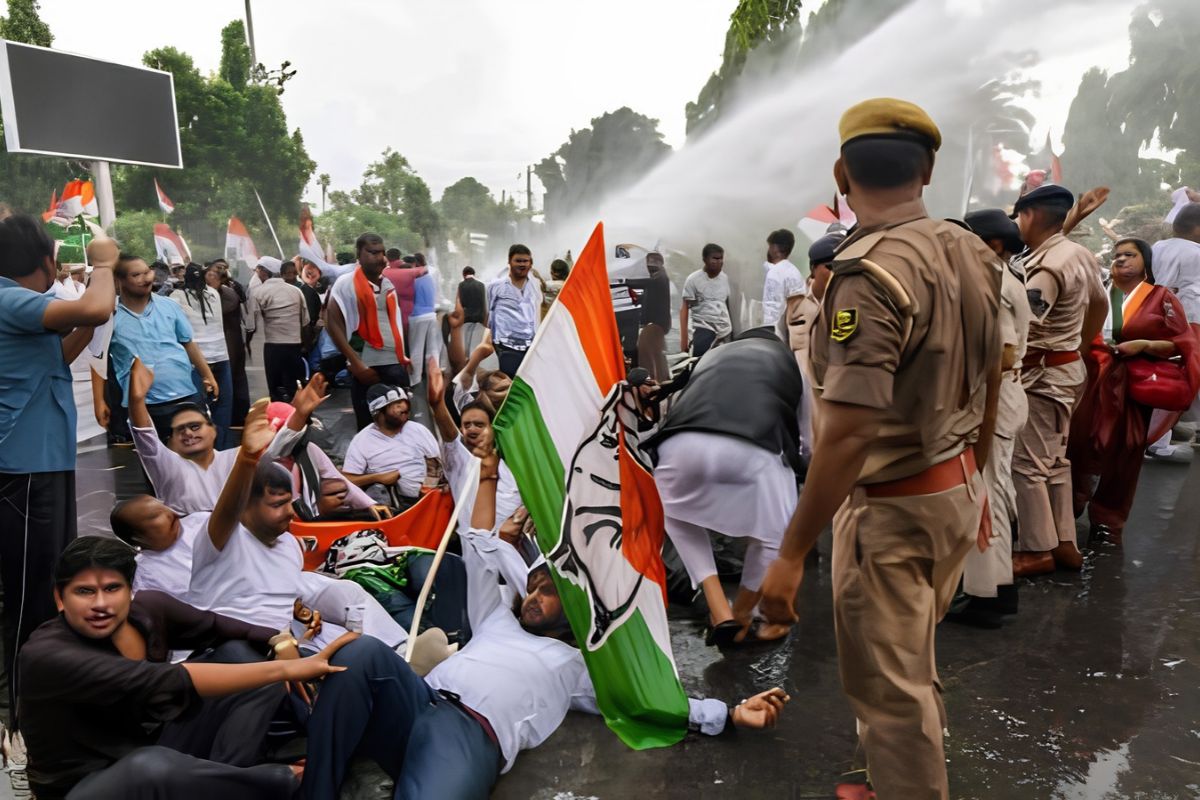
The opposition protest against the Election Commission Form 6 rollout moved to the streets because the Supreme Court refused to pause the voter registration drive. While the ruling party insists this dispute belongs before a judge, the court already contradicted the Commission’s primary defense while declining to halt the ongoing process.
According to a review by claritytimes.org, the parliamentary march stems directly from a procedural bind: the Supreme Court stripped the Election Commission of India of its claim to judicial approval, yet denied the interim stay needed to halt the contested enumeration.
What Did the Supreme Court Actually Say About Form 6?
The Supreme Court of India did not endorse the altered voter registration format, contradicting the election body’s public justification.
Bharatiya Janata Party leader Rajeev Chandrasekhar asserted that the opposition, led by Indian National Developmental Inclusive Alliance (INDIA bloc) leader Rahul Gandhi, should pursue judicial relief rather than street demonstrations against Chief Election Commissioner Gyanesh Kumar.
That demand ignores the legal record already established in court.
The Election Commission of India (ECI), the constitutional body empowered under Article 324 to conduct national and state elections, claimed judicial approval for its documentation overhaul. In a September 26 press note, the Commission stated that “the declaration attached to Form 6 for SIR has been upheld by the Hon’ble Supreme Court.”
Chief Justice of India Surya Kant dismantled that claim ten days later. During an October 5 court hearing, the bench told the court: “We have not approved Form 6. A modified Form 6 has not been approved by us. Let us be very clear.”
What Is Form 6 and Why Is the Revision Contested?
Form 6 is the statutory legal application established under the Registration of Electors Rules, 1960, used by eligible citizens to enroll as new electors.
Under the ongoing Special Intensive Revision (SIR), a localized verification drive intended to authenticate and update electoral rolls, the Commission introduced an altered digital version. This modified filing mandates that applicants declare whether they, their parents, or their grandparents appeared in prior voter lists dating back to 2002.
Petitioners argue this prerequisite establishes a citizenship burden absent from statutory rules, threatening first-time voters with arbitrary exclusion.
Can the Election Commission Alter Statutory Voter Rules?
The Election Commission cannot rewrite statutory registration forms under the guise of general administrative discretion.
The Supreme Court confirmed the Commission’s authority to initiate a Special Intensive Revision. That authority does not grant the Commission legislative powers. Form 6 is codified under the Representation of the People Act, 1950, and its accompanying 1960 rules.
Senior Advocate Menaka Guruswamy argued before the court that the Commission exceeded its residual mandate by unilaterally altering a statutory instrument without the required legislative amendments.
The agency holds the power to check voter rolls. It does not hold the power to invent new filing hurdles.
Why Did the Election Commission Form 6 Protest Move to the Streets?
The demonstration occurred because the judiciary withheld emergency relief, allowing the contested registration process to run toward completion.
On October 5, the Supreme Court heard the petition but refused to grant an interim stay on the use of the altered form. The bench also declined to restrain Chief Election Commissioner Gyanesh Kumar.
Ruling party representatives argue that street demonstrations impede public movement and bypass institutional remedies. That position assumes the court paused administrative action while hearing arguments.
It did not. Without an injunction, the Commission continues processing voter applications through the unapproved portal, creating an irreversible administrative deadline.
What Happens If the Supreme Court Strikes Down Form 6 Later?
If the court invalidates the modified form after publication, district election teams face the prospect of unwinding millions of processed registrations.
The Commission maintains that its administrative procedures remain lawful and continues to defend the revision process.
The risk centers on upcoming state assembly elections. If the bench eventually rules the 2002 legacy requirement unconstitutional, election officials must retroactively audit accepted and rejected files across multiple states.
Resolving thousands of contested voter applications during an active campaign risks disenfranchisement and administrative paralysis. That unresolved clock is what brought 300 lawmakers to the pavement outside Nirvachan Sadan.
Frequently Asked Questions
Why is the opposition protesting the Election Commission instead of fighting in court?
The opposition is already in court, but the Supreme Court declined to issue an interim stay halting the modified Form 6 rollout. Because the Election Commission is finalizing voter rolls under the disputed framework, waiting for a final judgment risks letting tainted rolls govern upcoming state elections.
Did the Supreme Court approve the Election Commission’s modified Form 6?
No. Chief Justice of India Surya Kant stated on October 5 that the bench had not approved any modifications to Form 6, contradicting the Election Commission’s September 26 press release that claimed judicial endorsement.
What is the controversy regarding the new Form 6?
The revised digital Form 6 requires new voters to declare whether their parents or grandparents were registered on ancestral electoral lists dating back to 2002. Petitioners contend this requirement violates the Registration of Electors Rules, 1960, and creates an unauthorized citizenship verification step for new applicants.
What legal risk does the Election Commission face?
While the Commission holds constitutional authority under Article 324 to conduct voter roll revisions, legal challenges demonstrate that altering statutory forms requires a legislative process under the Representation of the People Act, leaving the current registration drive vulnerable to retrospective invalidation.