






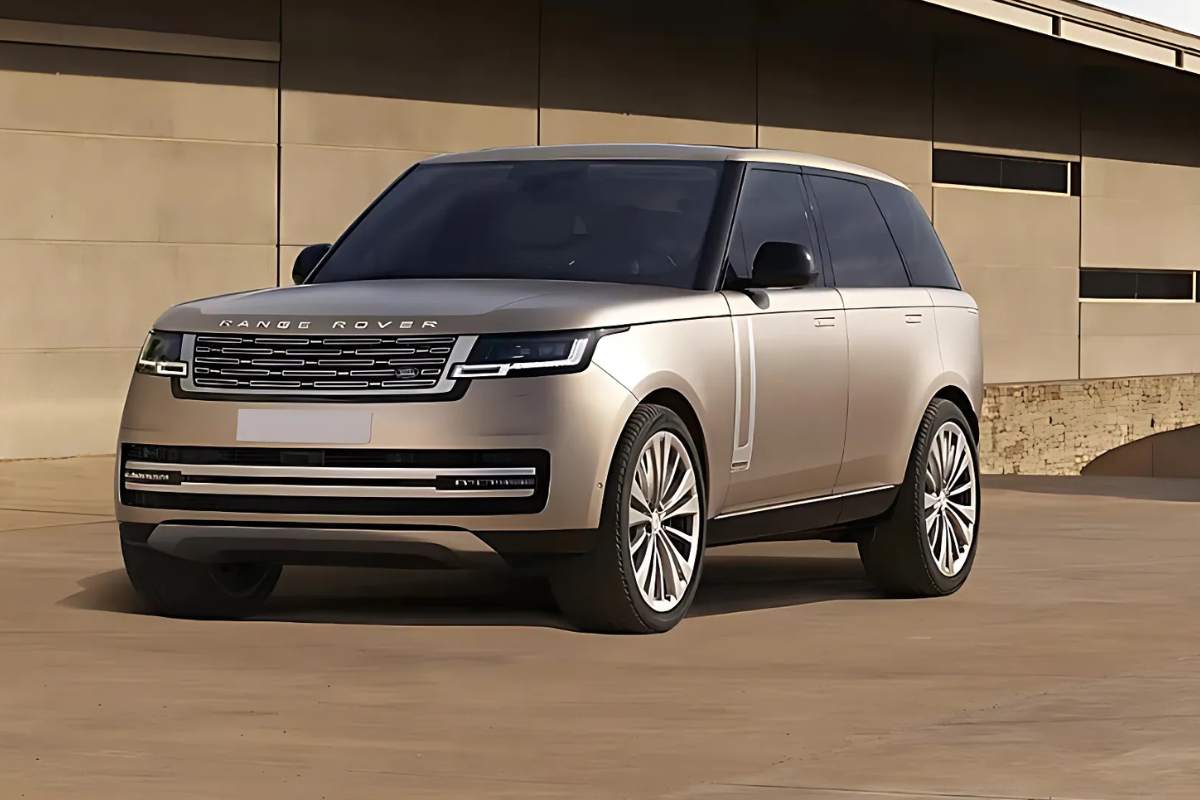
The bilateral negotiations surrounding the landmark United Kingdom–India Free Trade Agreement (FTA) have established a transformative precedent for the domestic automotive landscape: the phased reduction of steep customs tariffs on British-manufactured premium and luxury vehicles. Under the agreed Tariff Rate Quota (TRQ) mechanism negotiated between the Ministry of Commerce & Industry and the UK Department for Business and Trade, basic customs duties on select Completely Built Units (CBUs) will decline from prohibitive levels exceeding 100% down to a targeted 10% threshold over an agreed transition period.
Decoding the Automotive Chapter: CBU Tariffs vs. Tariff Rate Quotas (TRQs)
India has historically maintained some of the world’s highest automotive import barriers to protect domestic manufacturing and encourage foreign direct investment under the ‘Make in India’ framework. Prior to the FTA pact, imported automobiles faced an aggressive two-tier customs schedule:
- Standard CBU Tariffs: Vehicles with a Cost, Insurance, and Freight (CIF) value under $40,000 were taxed at 70%, while premium vehicles exceeding $40,000 or engine displacements above 3,000cc (petrol) and 2,500cc (diesel) incurred a massive 100% basic customs duty (rising to roughly 110% after Social Welfare Surcharge and integrated GST).
- The TRQ Compromise: To prevent market disruption for domestic luxury assemblers represented by the Society of Indian Automobile Manufacturers (SIAM), the FTA does not open the floodgates unconditionally. Instead, it introduces a quota-governed window: an initial annual quota of premium CBUs qualifies for an immediate duty slash to approximately 30%–35%, progressively ratcheting down to 10% over five to ten years for volumes within the quota cap.
Tariff Impact Matrix Across Vehicle Import Categories
| Import Category | Pre-FTA Effective Customs Duty | UK-India FTA Target Duty (Under TRQ) | Impacted Brands & Marque Lines |
|---|---|---|---|
| Ultra-Luxury CBUs (>£100,000 CIF) | 100% + SWS (~110%) | Phased reduction to 10% | Rolls-Royce (Phantom, Ghost), Bentley (Continental, Flying Spur), Aston Martin |
| High-End Performance & Sports | 100% | Phased reduction to 15%–10% | McLaren, Lotus, specialized Jaguar F-Type variants |
| CKD (Completely Knocked Down) Kits | 15% to 35% | Maintained / Minor concessions | Locally assembled Land Rover Defender & Range Rover Velar (Pune assembly) |
| Electric Vehicles (EV CBUs) | 70% to 100% | Aligned with National E-Vehicle Policy | Electric Range Rover, Lotus Eletre, future British EV platforms |
Consumer Pricing Reality: What Buyers Can Actually Expect
While a drop from 100% to 10% in basic customs duty appears to halve vehicle prices on paper, the on-road retail price in India is determined by a layered compounding tax regime. Vehicles imported under the revised quota will still be subject to:
- Goods and Services Tax (GST): 28% peak GST applicable across all luxury motor vehicles.
- Compensation Cess: Up to 22% additional cess levied on high-displacement SUVs and luxury sedans, pushing effective domestic indirect taxes to approximately 50%.
- State Road Tax and Registration: 10% to 20% registration levies imposed by individual state transport departments (e.g., in Maharashtra, Karnataka, and Delhi).
Consequently, an ultra-luxury vehicle retailing in London for £150,000 (roughly ₹1.6 crore), which previously carried an Indian on-road cost exceeding ₹4.2 crore due to cumulative duties, will see its landing price adjust downward by ₹80 lakh to ₹1.2 crore‑delivering significant savings to ultra-high-net-worth buyers while preserving substantial exchequer revenue.
Interlinked Trade & Automotive Economy Insights
The automotive chapter represents merely one facet of bilateral economic recalibration. To explore the broader treaty mechanisms governing cross-border service trade, whiskey tariffs, and professional visas, consult our comprehensive analysis of the UK-India trade deal and bilateral economic pact. For perspective on India’s evolving domestic vehicle marketplace, explore our buyer comparison on electric vehicle adoption and pricing in India, alongside our market analysis on how GST reforms continue to propel record festive vehicle sales.
Frequently Asked Questions
Does the 10% tariff apply to German luxury cars like BMW, Audi, and Mercedes-Benz?
No. The preferential tariff schedule is strictly bilateral, negotiated between India and the United Kingdom. German marques manufactured in the European Union (Germany, Austria, Hungary) remain subject to standard CBU import tariffs unless an independent India‛EU Broad-based Trade and Investment Agreement (BTIA) is ratified.
Will local manufacturing in India be hurt by the tariff cut?
Because the tariff concession is restricted by an annual quota volume and carries minimum CIF price thresholds, it affects only niche ultra-luxury models sold in limited volumes (hundreds of units annually). High-volume models manufactured or assembled in India (such as Mercedes C-Class, BMW 3 Series, or mass-market passenger cars) remain insulated from direct foreign competition.