






A big change in policy for the UAE’s sports ecosystem
There has been a small but important change in policy in the United Arab Emirates. And while it might not make big news right away, the move could have a big effect on the country’s sports scene.
Under its changing tax system, the UAE has officially given non-commercial sports organizations a break on corporate taxes. The new rule is meant to improve community-based and grassroots sports programs. It is a deliberate effort by the government to promote the country’s sports culture while also making economic changes.
Yes, it’s a change in policy that has to do with technology. But it has bigger effects on things like amateur football academies and local athletics clubs that have tight budgets and depend on sponsorships, volunteers, and community funding.
Getting to Know the UAE’s Corporate Tax Scene
As part of its plan to modernize its finances, the UAE added a federal corporate tax. In the past, the country was known for having a tax system that was good for business. Now, to keep up with international economic standards and make sure the country’s finances are stable, it has started using a corporate tax system.
For taxable business profits that are above certain levels, the standard corporate tax rate is currently 9 percent. This was a big change for a country that had been seen as mostly tax-free for businesses for a long time.
Authorities also made it clear early on that not everyone would be treated the same, though.
Some groups, especially those that work for the public good rather than for profit, were supposed to get special treatment. Non-profit sports organizations are now fully protected by that law.
What the New Exemption Really Means
The new corporate tax rules say that non-commercial sports groups in the UAE won’t have to pay corporate tax as long as they meet certain requirements.
In short, the exemption applies to sports organizations that:
- Work without making money
- Concentrate on encouraging sports, fitness, and community involvement
- Don’t give money to members or shareholders as profits
- Put the money you make back into activities that help sports grow
The policy is in line with a larger government view that sees sports as more than just entertainment; they are also a form of public infrastructure that improves health, gets young people involved, and strengthens national identity.
A senior policy advisor who knew about the regulatory update is said to have explained the reasoning behind the move in simple terms. The advisor said, “These groups aren’t meant to make money.” “They are there to help communities, train athletes, and support public health programs.” Taxing them would make those goals less likely to happen.
Why the UAE Is Helping Community Sports
The decision is in line with the UAE’s long-term national plans, which put health, youth empowerment, and competitiveness in international sports at the top of the list.
More and more, officials have pointed out that sports are an important part of social development. And to be honest, the numbers tell a very interesting story. More and more people in the UAE have been joining community sports programs, especially young people and expats, over the past ten years.
Local sports clubs, which are often small, run by volunteers, and depend on community funding, are a big part of that growth.
Many of these groups might have trouble staying financially stable without tax breaks. Costs of running the business, like renting space, hiring coaches, buying training equipment, and traveling, add up quickly.
These organizations can use the money they save from not having to pay corporate taxes to train athletes, improve infrastructure, and expand their programs.
Who is a Non-Commercial Sports Entity?
There is no automatic exemption. To qualify, organizations must meet strict criteria. This makes sure that only real non-profit sports groups get the money.
Most of the time, qualifying entities are:
- Clubs for amateur sports
- Youth training academies that don’t share their profits
- Organizations for fitness and recreational sports in the community
- National sports federations that are not for profit
- Foundations for athletic development
Professional teams, private training centers that make money, and sports entertainment companies are all examples of commercial sports businesses that still have to pay corporate taxes according to normal rules.
This difference is very important. It looks like the authorities are determined to stop organizations from abusing the exemption by trying to set themselves up as non-profits while still making money.
Rules for Compliance and Governance
The exemption gets rid of tax burdens, but it doesn’t get rid of regulatory oversight. To get tax-exempt status, groups must keep clear financial records and show that they are not for profit on a regular basis.
Some of the things you have to do to comply are:
- Evidence of how the non-profit works
- Proof that money goes to sports development programs
- Financial records that show no distribution of dividends or profits
- Reporting to tax authorities regularly
If you don’t meet these requirements, you could lose your tax-exempt status.
Experts in financial compliance say that the system promotes responsibility while still giving people the freedom to do their jobs. “This is not a free pass,” said one tax consultant in the area. “Entities must show that they really do serve public and athletic development purposes.”
The Policy’s Bigger Economic Strategy
The UAE’s choice shows that they are trying to find a balance.
On one hand, the country is using global tax standards to make its economy more trustworthy and open. On the other hand, it protects areas that provide long-term social value but don’t make a lot of money.
Sports development fits perfectly into that second group.
Policymakers want to encourage more people to play sports at the local level by giving them tax breaks. This will help the country reach its bigger goals. The UAE has become more and more of a global sports hub, hosting major international events in football, cricket, tennis, mixed martial arts, and Formula One racing.
A lot of the time, these kinds of goals start with grassroots development.
Countries with strong youth and amateur sports programs usually have top athletes, get people involved in their communities, and make people proud of their country. It looks like the UAE government is thinking long-term… building up the base before adding to the peak.
Effects on the growth of young people and athletes
For a lot of community clubs and local sports academies, the exemption could change everything.
Youth sports programs, especially those that focus on skill development instead of making money, often have very little money to work with. When businesses don’t have to pay taxes, they have more money to invest in:
- Programs for coaching and training
- Scholarships for young athletes
- Upgrades to equipment
- Building new facilities
- Taking part in competitions at the regional and international levels
A manager of a youth football academy in Dubai is said to have talked about the relief in real terms. He said, “Every dirham counts.” “When you run training programs for kids, you don’t think about making money. You’re thinking about how to make programs easy to get to and cheap.”
Helping the UAE Reach Its Public Health Goals
The policy is also closely related to national public health efforts.
The UAE has started a number of campaigns to promote active lifestyles and physical fitness. The goal is to lower long-term healthcare costs associated with living a sedentary lifestyle and diseases related to it.
Community sports groups are very important for reaching these goals. They make it easy for people of all ages and backgrounds to get fit.
When authorities give money to these kinds of organizations, they are effectively investing in ways to keep people from getting sick.
It’s a long game that puts the health of the population, lower medical costs, and better overall well-being at the top of the list.
Promoting volunteering and getting involved in the community
Non-profit sports organizations often depend on volunteers, like coaches, event planners, trainers, and administrative staff, who give their time and effort without getting paid.
Tax breaks help keep these volunteer-driven models going by making it easier for groups that already have limited resources to stay afloat.
People who study social development often talk about how amateur sports can bring people together. These groups do more than just help people get in shape. They also help people make friends, bring different cultures together among expats, and give young people a place to go to do things.
In countries with many cultures, like the UAE, these kinds of programs can help people get along better.
Following the Best Practices Around the World
Many countries around the world give tax breaks to non-profit sports groups because they help society and help people grow.
The UAE is following international best practices by putting in place similar measures while keeping regulatory safeguards in place to stop abuse.
Tax policy experts say that these kinds of exemptions are often used to get people to play sports in their communities and make it easier for them to develop their athletic skills.
The UAE’s use of this method shows that it is becoming more involved in global economic and governance systems.
Possible Problems and Uncertain Areas
Some experts say that the policy could be hard to implement, even though things look good.
It can be hard to tell if an organization really doesn’t have any profit motives. For example, sports academies often charge fees for membership or training, which makes it hard to tell if they are businesses.
Authorities will probably use detailed financial reports and operational reviews to tell the difference between real non-profit work and a business that is pretending to be non-profit.
Tax consultants also stress how important it is for organizations to have clear rules and regulations to help them understand who is eligible and what they need to do to stay in compliance.
What the Sports Community Thinks
Most of the early responses from sports officials and community groups seem to be positive.
A lot of people see the exemption as a sign that their work is important to the country’s growth. One official from an athletics club said the move was “a step that validates the work grassroots sports bodies have been doing quietly for years.”
There is also hope that the policy could help start new community sports programs, especially in new residential areas where recreational facilities are still being built.
Making the UAE’s Sports Vision Stronger
Over the past 20 years, the UAE has steadily grown its global sports presence by hosting world-class tournaments and putting a lot of money into sports facilities.
But a lot of the time, success in sports around the world starts in the community.
The new tax exemption helps grassroots sports organizations by making it easier for them to pay their bills. This is part of the larger national goal of creating a sustainable sports ecosystem that encourages people to participate from childhood through professional levels.
The move also strengthens the UAE’s image as a country that puts social development and economic reform on the same level.
What Comes Next?
Implementation will depend a lot on how clear the rules are and how to follow them. Authorities are expected to give clear instructions on who is eligible, what they need to report, and how to get approval for exemption status.
For organizations to get tax breaks, they will probably have to officially register and show that they are not for profit by providing documentation and being open about how they work.
Tax experts say that sports organizations should start looking at their financial and governance practices to make sure they follow the new rules.
A Policy That Is More Than Just Taxes
The exemption might look like just another change to the budget at first. But in reality, it is part of a larger policy to support community development, improve public health, and make the country’s sports infrastructure stronger.
A lot of the time, sports organizations work behind the scenes, away from the attention of professional leagues and televised tournaments. Yet their influence can be profound.
The UAE is making a long-term bet by taking away the corporate tax burdens from these institutions. This bet is based on participation, youth engagement, and social well-being.
And in a country that still wants to be known as a global sports destination, that bet might mean more than just a symbol. One community club, one training program, and one young athlete at a time could change the future of sports in the Emirates.
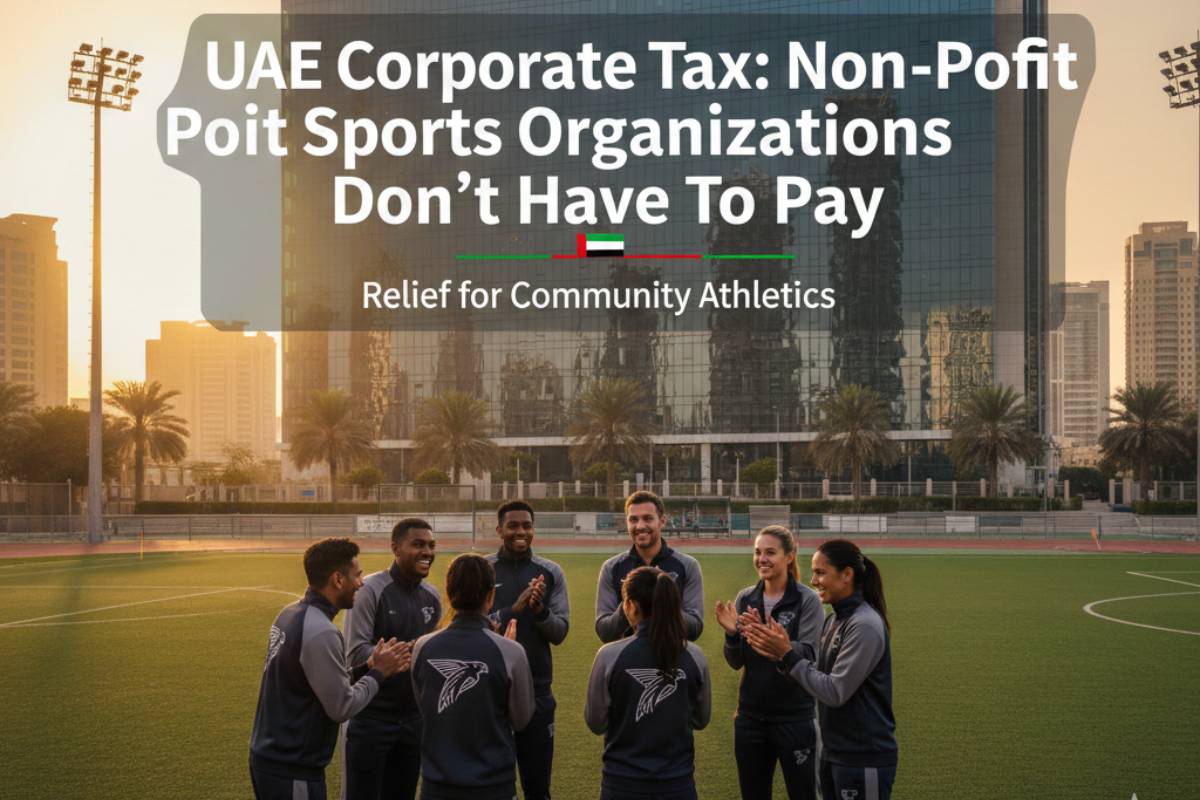
AE Corporate Tax: Non-Profit Sports Organizations Don’t Have to Pay
A big change in policy for the UAE’s sports ecosystem
There has been a small but important change in policy in the United Arab Emirates. And while it might not make big news right away, the move could have a big effect on the country’s sports scene.
Under its changing tax system, the UAE has officially given non-commercial sports organizations a break on corporate taxes. The new rule is meant to improve community-based and grassroots sports programs. It is a deliberate effort by the government to promote the country’s sports culture while also making economic changes.
Yes, it’s a change in policy that has to do with technology. But it has bigger effects on things like amateur football academies and local athletics clubs that have tight budgets and depend on sponsorships, volunteers, and community funding.
Getting to Know the UAE’s Corporate Tax Scene
As part of its plan to modernize its finances, the UAE added a federal corporate tax. In the past, the country was known for having a tax system that was good for business. Now, to keep up with international economic standards and make sure the country’s finances are stable, it has started using a corporate tax system.
For taxable business profits that are above certain levels, the standard corporate tax rate is currently 9 percent. This was a big change for a country that had been seen as mostly tax-free for businesses for a long time.
Authorities also made it clear early on that not everyone would be treated the same, though.
Some groups, especially those that work for the public good rather than for profit, were supposed to get special treatment. Non-profit sports organizations are now fully protected by that law.
What the New Exemption Really Means
The new corporate tax rules say that non-commercial sports groups in the UAE won’t have to pay corporate tax as long as they meet certain requirements.
In short, the exemption applies to sports organizations that:
- Work without making money
- Concentrate on encouraging sports, fitness, and community involvement
- Don’t give money to members or shareholders as profits
- Put the money you make back into activities that help sports grow
The policy is in line with a larger government view that sees sports as more than just entertainment; they are also a form of public infrastructure that improves health, gets young people involved, and strengthens national identity.
A senior policy advisor who knew about the regulatory update is said to have explained the reasoning behind the move in simple terms. The advisor said, “These groups aren’t meant to make money.” “They are there to help communities, train athletes, and support public health programs.” Taxing them would make those goals less likely to happen.
Why the UAE Is Helping Community Sports
The decision is in line with the UAE’s long-term national plans, which put health, youth empowerment, and competitiveness in international sports at the top of the list.
More and more, officials have pointed out that sports are an important part of social development. And to be honest, the numbers tell a very interesting story. More and more people in the UAE are joining community sports programs, especially young people and expats, over the past ten years.
Local sports clubs, which are often small, run by volunteers, and depend on community funding, are a big part of that growth.
Many of these groups might have trouble staying financially stable without tax breaks. Costs of running the business, like renting space, hiring coaches, buying training equipment, and traveling, add up quickly.
These organizations can use the money they save from not having to pay corporate taxes to train athletes, improve infrastructure, and expand their programs.
Who is a Non-Commercial Sports Entity?
There is no automatic exemption. To qualify, organizations must meet strict criteria. This makes sure that only real non-profit sports groups get the money.
Most of the time, qualifying entities are:
- Clubs for amateur sports
- Youth training academies that don’t share their profits
- Organizations for fitness and recreational sports in the community
- National sports federations that are not for profit
- Foundations for athletic development
Professional teams, private training centers that make money, and sports entertainment companies are all examples of commercial sports businesses that still have to pay corporate taxes according to normal rules.
This difference is very important. It looks like the authorities are determined to stop organizations from abusing the exemption by trying to set themselves up as non-profits while still making money.
Rules for Compliance and Governance
The exemption gets rid of tax burdens, but it doesn’t get rid of regulatory oversight. To get tax-exempt status, groups must keep clear financial records and show that they are not for profit on a regular basis.
Some of the things you have to do to comply are:
- Evidence of how the non-profit works
- Proof that money goes to sports development programs
- Financial records that show no distribution of dividends or profits
- Reporting to tax authorities regularly
If you don’t meet these requirements, you could lose your tax-exempt status.
Experts in financial compliance say that the system promotes responsibility while still giving people the freedom to do their jobs. “This is not a free pass,” said one tax consultant in the area. “Entities must show that they really do serve public and athletic development purposes.”
The Policy’s Bigger Economic Strategy
The UAE’s choice shows that they are trying to find a balance.
On the one hand, the country is using global tax standards to make its economy more trustworthy and open. On the other hand, it protects areas that provide long-term social value but don’t make a lot of money.
Sports development fits perfectly into that second group.
Policymakers want to encourage more people to play sports at the local level by giving them tax breaks. This will help the country reach its bigger goals. The UAE has become more and more of a global sports hub, hosting major international events in football, cricket, tennis, mixed martial arts, and Formula One racing.
A lot of the time, these kinds of goals start with grassroots development.
Countries with strong youth and amateur sports programs usually have top athletes, get people involved in their communities, and make people proud of their country. It looks like the UAE government is thinking long-term… building up the base before adding to the peak.
Effects on the growth of young people and athletes
For a lot of community clubs and local sports academies, the exemption could change everything.
Youth sports programs, especially those that focus on skill development instead of making money, often have very little money to work with. When businesses don’t have to pay taxes, they have more money to invest in:
- Programs for coaching and training
- Scholarships for young athletes
- Upgrades to equipment
- Building new facilities
- Taking part in competitions at the regional and international levels
A manager of a youth football academy in Dubai is said to have talked about the relief in real terms. He said, “Every dirham counts.” “When you run training programs for kids, you don’t think about making money. You’re thinking about how to make programs easy to get to and cheap.”
Helping the UAE Reach Its Public Health Goals
The policy is also closely related to national public health efforts.
The UAE has started a number of campaigns to promote active lifestyles and physical fitness. The goal is to lower long-term healthcare costs associated with living a sedentary lifestyle and diseases related to it.
Community sports groups are very important for reaching these goals. They make it easy for people of all ages and backgrounds to get fit.
When authorities give money to these kinds of organizations, they are effectively investing in ways to keep people from getting sick.
It’s a long game that puts the health of the population, lower medical costs, and better overall well-being at the top of the list.
Promoting volunteering and getting involved in the community
Non-profit sports organizations often depend on volunteers, like coaches, event planners, trainers, and administrative staff, who give their time and effort without getting paid.
Tax breaks help keep these volunteer-driven models going by making it easier for groups that already have limited resources to stay afloat.
People who study social development often talk about how amateur sports can bring people together. These groups do more than just help people get in shape. They also help people make friends, bring different cultures together among expats, and give young people a place to go to do things.
In countries with many cultures, like the UAE, these kinds of programs can help people get along better.
Following the Best Practices Around the World
Many countries around the world give tax breaks to non-profit sports groups because they help society and help people grow.
The UAE is following international best practices by putting in place similar measures while keeping regulatory safeguards in place to stop abuse.
Tax policy experts say that these kinds of exemptions are often used to get people to play sports in their communities and make it easier for them to develop their athletic skills.
The UAE’s use of this method shows that it is becoming more involved in global economic and governance systems.
Possible Problems and Uncertain Areas
Some experts say that the policy could be hard to implement, even though things look good.
It can be hard to tell if an organization really doesn’t have any profit motives. For example, sports academies often charge fees for membership or training, which makes it hard to tell if they are businesses.
Authorities will probably use detailed financial reports and operational reviews to tell the difference between real non-profit work and business that is pretending to be non-profit.
Tax consultants also stress how important it is for organizations to have clear rules and regulations to help them understand who is eligible and what they need to do to stay in compliance.
What the Sports Community Thinks
Most of the early responses from sports officials and community groups seem to be positive.
A lot of people see the exemption as a sign that their work is important to the country’s growth. One official from an athletics club said the move was “a step that validates the work grassroots sports bodies have been doing quietly for years.”
There is also hope that the policy could help start new community sports programs, especially in new residential areas where recreational facilities are still being built.
Making the UAE’s Sports Vision Stronger
Over the past 20 years, the UAE has steadily grown its global sports presence by hosting world-class tournaments and putting a lot of money into sports facilities.
But a lot of the time, success in sports around the world starts in the community.
The new tax exemption helps grassroots sports organizations by making it easier for them to pay their bills. This is part of the larger national goal of creating a sustainable sports ecosystem that encourages people to participate from childhood through professional levels.
The move also strengthens the UAE’s image as a country that puts social development and economic reform on the same level.
What Comes Next?
Implementation will depend a lot on how clear the rules are and how to follow them. Authorities are expected to give clear instructions on who is eligible, what they need to report, and how to get approval for exemption status.
For organizations to get tax breaks, they will probably have to officially register and show that they are not for profit by providing documentation and being open about how they work.
Tax experts say that sports organizations should start looking at their financial and governance practices to make sure they follow the new rules.
A Policy That Is More Than Just Taxes
The exemption might look like just another change to the budget at first. But in reality, it is part of a larger policy to support community development, improve public health, and make the country’s sports infrastructure stronger.
A lot of the time, sports organizations work behind the scenes, away from the attention of professional leagues and televised tournaments. Yet their influence can be profound.
The UAE is making a long-term bet by taking away the corporate tax burdens from these institutions. This bet is based on participation, youth engagement, and social well-being.
And in a country that still wants to be known as a global sports destination, that bet might mean more than just a symbol. One community club, one training program, and one young athlete at a time could change the future of sports in the Emirates.