







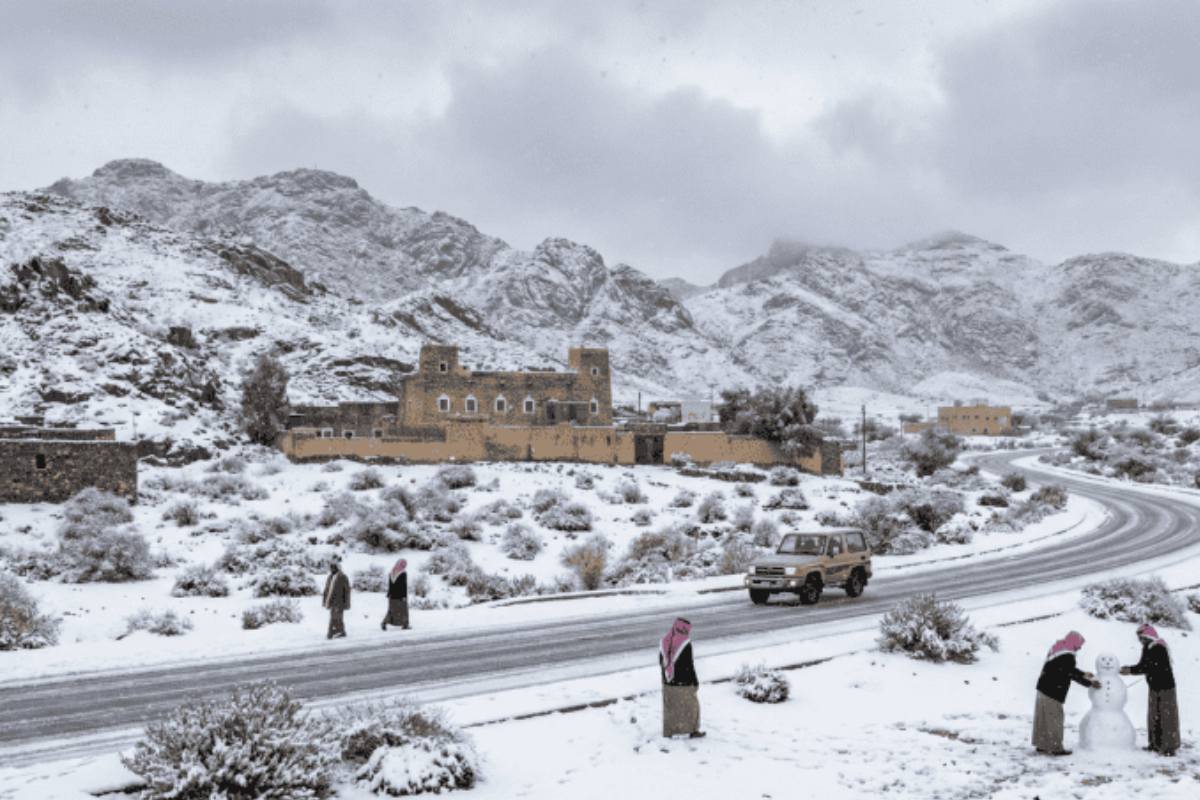
How a rare winter storm is changing the weather and life from the north to the heart of the desert
Saudi Arabia, A strong cold wave is moving through the Kingdom, bringing temperatures down to freezing levels in places that don’t usually see such harsh winter weather.
Parts of northern Saudi Arabia saw temperatures drop to or near 0°C, which has caught the attention of both climatologists and residents.
Early Sunday, frost covered exposed ground across a wide area. Meteorological authorities have now confirmed that this strange chill is one of the coldest spells this winter.
It’s chilly. Very cold.
And even though Saudi Arabia’s deserts are known for their scorching summer heat, 50°C or more, winter here tells a different story: sometimes dramatic, and this season… well, exceptional.
Cold Wave Overview: The Kingdom’s Temperatures Are Dropping
Meteorologists at the National Center for Meteorology (NCM) have confirmed that a wide cold front coming down from the north has caused temperatures to drop sharply across large areas of Saudi Arabia.
Forecasts say that the system will probably stay around for most of the week, affecting both the north and the center.
Several towns and governorates in the north of the country had some of the lowest temperatures in the country on Sunday:
- Arar, Qurayyat, and Turaif: 0°C, the coldest temperature reported in the Kingdom that morning
- Rafha: 3°C, a chilly temperature
- Sakaka: Around 4°C
These numbers are surprising, especially for Saudi Arabia, given the country’s normal winter averages.
Frost formed on open land, which was a clear sign of how bad this cold wave was.
People bundled up to protect themselves from the cold winds.
This event is pushing into territory that Saudis don’t usually see, not just a few cold mornings.
What Caused the Cold Wave? Weather Forces at Work
Weather experts say that this sudden drop in temperature is caused by a strong high-pressure system moving down from Siberia.
Basically, winds flow down through the Middle East, bringing cold air from the North Pole to the Arabian Peninsula.
Saudi Arabia is right in the middle of this.
Sana Al-Hassan, a meteorologist, told reporters:
“It’s not every day that we see a system like this go so far south.”
It’s normal for the north to be cold in the winter, but this time it’s really bad, with temperatures dropping to zero and below.
That cold push from the Arctic won’t stay in just a few places, either.
Forecast maps show that the cold bleed will spread to areas like:
- Tabuk and Al-Jouf
- Northern Borders
- Hail and Qassim
- Riyadh and the central plains
- Northern districts of the Eastern Province
And if you think that’s wide, it is.
It goes from close to the Jordanian border to deep inside the Kingdom.
Timeline: From a Mild Season to the Third Major Cold Spell
This most recent surge is what weather experts are calling the third major cold wave of the winter of 2025–26.
Earlier cold events included temperatures below zero in late December and some snowfall in high places like the mountains around Tabuk.
This is how it happened:
- Mid-December: The first winter chills and some snow at higher elevations
- Late December: Another wave brought temperatures below zero in some parts of the north
- Early January: The current cold wave started over the weekend and has gotten worse since then. It is expected to last until the middle of the week
That order makes an important point.
This isn’t just a one-time frost.
It is part of a series of active winter weather patterns that have surprised both scientists and people who live there.
How Everyday Saudis Are Dealing With the Cold
As the cold sets in, life in many Saudi cities and towns has changed, at least for a little while.
In Tabuk, a place that usually has cool desert nights instead of frost, one shopkeeper said of the morning chill:
“I went outside before sunrise, and honestly, I thought my thermometer was broken.”
It’s just really cold.
Families in northern villages are changing their daily routines:
- They turn on the heaters
- They stop working outside during the coldest hours
- After morning prayers, they quickly go back inside
People in Riyadh are putting on their winter coats earlier than usual, even though the temperatures stay above freezing.
Kids are talking about how strange the breeze feels.
Looking at the Past and Making Comparisons
Saudi Arabia does have cold spells, but they usually don’t get as low as this.
In the past, northern areas sometimes had frost and snow in the highlands, but these kinds of lows are less common.
In 2016, an extreme cold event brought snow to the central and northern parts of the Kingdom.
In Turaif, temperatures dropped as low as -4°C, which is a record that older residents still remember.
This current cold wave isn’t likely to break that record, but it is one of the strongest cold waves we’ve had in the past few years.
Safety Precautions and Measures for the Public
The National Centre for Meteorology has sent out repeated warnings telling people, especially those in the north, to stay informed and do what they can to protect their health and property.
Some important suggestions are:
- Keeping people from being outside too much in the early morning and late at night
- Making sure homes are properly insulated, especially in colder areas
- Keeping an eye on official weather updates through trusted sources
Local governments are also working with health and emergency services to help the communities that are most affected by the cold.
Why It Matters: Beyond the Chill
A cold snap might seem like a short-lived weather oddity at first.
But for a country where heat has always been the main climate, these events have bigger effects.
Think about the bigger picture:
- Energy demand: When it’s colder, people need more heat, which puts a strain on power networks
- Agriculture and livestock: Frost can harm crops and affect animals that live outside
- Infrastructure: Roads and water systems are more likely to break down when it freezes unexpectedly
- Tourism and outdoor activity: Earlier snowfall brought in crowds, but unpredictable patterns make planning harder
Scientists also say that while no one cold wave can define climate trends, it’s important to keep an eye on the weather becoming more unpredictable, with hotter summers and colder winters.
Looking Ahead: Predictions and What Will Happen Next
As the week goes on, weather experts say the cold wave will continue, with temperatures staying low until at least Tuesday.
Winds are expected to make the cold even worse, especially in open plains and high places.
Weather models, on the other hand, say that the cold system will start to weaken and the weather will get milder again by the middle of the week.
There will be relief, but not right away.
People who live in or visit affected areas should be careful, especially when they are outside or traveling.
Conclusion: A Kingdom Under Chill
This cold wave is unusual for a place known for its hot, sunny weather.
It reminds us of how unpredictable weather can be.
This winter, Saudi Arabia had to deal with temperatures below zero.
The ground in the north was covered in frost, and the winds were strong across the central plateau.