






Sweeping New Directive Freezes All Immigration Cases Amid Security Concerns, Leaving Applicants in Limbo
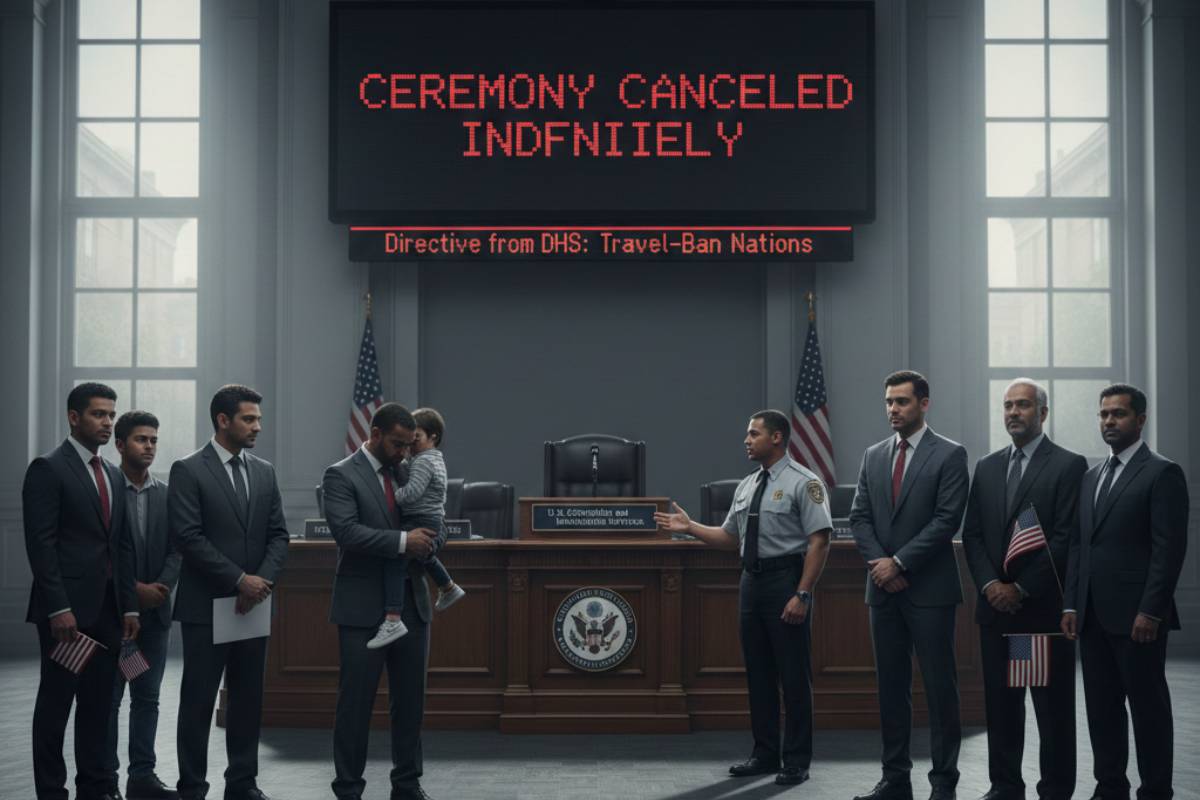
In a dramatic, unannounced expansion of its immigration restrictions, the U.S. government has paused all pending immigration applications, including the final, much-anticipated naturalization ceremonies, for individuals from 19 countries already facing restrictions under a broader “travel ban.” This sudden directive, issued internally by U.S. Citizenship and Immigration Services (USCIS), has immediately halted the dreams of countless legal permanent residents who were literally days away from taking the Oath of Allegiance and becoming American citizens, a truly seismic shift in how legal immigration pathways are being processed in the country.
The move, which became public knowledge through internal agency guidance early this week, follows a particularly unsettling incident: the recent shooting of two National Guard members in Washington, D.C., allegedly by an Afghan national. The administration, citing heightened national security concerns and a need for comprehensive re-vetting, essentially froze the entire immigration pipeline for nationals of these 19 specific nations, suggesting that officials are indeed taking no chances whatsoever with the future of national
The New Freeze: More Than Just Travel Restrictions
This isn’t just about barring new entries; that was the earlier measure, the one that put the travel restrictions into place back in June. No, this latest action goes much, much further, reaching right into the heart of the U.S. legal immigration system by affecting people who have been living legally in the country, some for many years, holding green cards, working, paying taxes, and diligently moving through the lengthy process toward citizenship.
For those applying for naturalization, the oath ceremony is the triumphant culmination of years of waiting, bureaucratic navigation, and background checks; it’s the moment they finally, definitively, become American. To have that moment, the final, celebratory step, snatched away without warning, well, you can imagine the disappointment, the utter frustration, and the profound uncertainty this creates.
The Rationale: Security Re-Vetting and the D.C. Shooting
The internal USCIS policy memo says that the main reason for this huge, never-before-seen pause is that they need to do a “comprehensive re-review” of applicants from “high-risk countries of concern.”
The agency pointed directly to the shooting near the White House during Thanksgiving week, in which an Afghan national is accused of killing one National Guard soldier and wounding another. It’s important to note that this person was already living in the U.S. They were supposedly given asylum during a previous administration, which seems to have made the current administration more interested in re-evaluating the vetting process for people who are already in the U.S.
USCIS made it clear that this pause is necessary to “fully assess all national security and public safety threats,” which shows a big, systemic change in policy.
- Targeted Re-Review: The order says that all foreign nationals from the 19 affected countries who came to the U.S. on or after January 20, 2021, which is when the previous administration began, should be re-reviewed and possibly re-interviewed.
- Approved Benefits Under Scrutiny: The memo also says that all “approved benefit requests” for immigrants from these countries who came during the previous administration must be looked at again. This means that even those who already have green cards are not completely free from the new scrutiny.
It’s clear that this is an aggressive stance, but the Department of Homeland Security (DHS), which oversees USCIS, has strongly defended it, saying they are doing “everything possible to make sure that those who become citizens are the best of the best.” They also made it very clear that they “will take no chances when the future of our nation is at stake,” which is a clear reflection of the administration’s overall focus on stricter security screening.
What Countries Are Affected by the Freeze?
The current freeze on applications and ceremonies applies to nationals of the same 19 countries that were already listed in the administration’s earlier June proclamation, a measure colloquially known as the travel ban. Now, however, the restriction is not just on entry, but on all final adjudications, meaning approvals, denials, and those final oath ceremonies, for a wide range of immigration benefits.
The 19 countries are split into two groups based on how bad the earlier travel ban was, but all 19 are now subject to the full halt on immigration processing:
12 Countries with Full Travel Ban Restrictions:
- Afghanistan
- Myanmar (Burma)
- Chad
- The Republic of the Congo
- Equatorial Guinea
- Eritrea
- Haiti
- Iran
- Libya
- Somalia
- Sudan
- Yemen
Countries with Some Travel Restrictions (7):
- Burundi
- Cuba
- Laos
- Sierra Leone
- Togo
- Turkmenistan
- Venezuela
It’s a long list that includes countries in Africa, the Middle East, and parts of Asia and Latin America. Many of these countries have been dealing with war or political instability, which is probably why they made the list in the first place, according to officials.
Human Impact: Hopes Delayed and Unnerving Uncertainty
The immigrants who are stuck in this bureaucratic limbo feel very disappointed and scared about the future. You need to think about what that means: people who have made lives here, passed their English and civics tests, gone through years of background checks, and planned celebrations for their oath ceremony are now being told, in a way, “not yet,” or maybe “not at all,” even.
Immigration lawyers all over the country are seeing immediate effects.
One Tennessee-based lawyer told us, “We had a client, a doctor from Iran, who was literally scheduled for her oath ceremony this week.” This lawyer and her colleagues were shocked and angry. “She’d been waiting years for this. Now? Her ceremony is just gone from the system, canceled, with no new date or real explanation other than the memo. It’s devastating, and it’s not just her; we’re hearing reports from applicants with pending green cards, too, from Venezuela, Afghanistan, all over.”
It’s not just a delay; it feels like the finish line has been moved or even taken away. There is no official word on when the pause will end or what the re-vetting process will be like, which makes legal residents feel very unsafe.
- Missed Opportunities: Delays in naturalization can have real-world effects, like keeping new citizens from voting, getting jobs that require security clearances, or sponsoring family members for immigration benefits.
- Emotional Toll: The process of becoming a citizen is often very personal and shows a strong commitment to a new country. The sudden cancellation of the ceremony feels like a rejection of that commitment, which is a lot to deal with.
Michael Valverde, a former high-ranking official at USCIS, said that the agency sometimes takes “tactical” breaks for certain groups of cases, but this current action is “unprecedented” because it affects every type of immigration benefit for such a large number of people. It’s a traffic jam, plain and simple, and it’s only going to make the huge backlog in the U.S. immigration system even worse.
A Short Timeline of More Restrictions
The current application freeze isn’t happening in a vacuum; it’s the latest in a series of quickly put-in-place, increasingly strict rules from the government since the start of the year. It clearly shows that all levels of the immigration system put aggressive enforcement and security screening first.
- June 2025: The government puts the expanded travel ban into effect, fully or partially blocking entry for citizens from the 19 named countries because of national security concerns. At the time, officials didn’t directly affect people who were already living in the U.S. legally.
- Late November 2025: A shooting happens in Washington, D.C., and it is said to involve a citizen of one of the restricted countries.
- Days After the Shooting: The government announces several actions, such as halting all asylum decisions and stopping the processing of visas for Afghans who helped the U.S. in the war.
- This Week (December 2025): The USCIS internal memo is sent out, putting a complete stop to all immigration cases that are still open, including the citizenship oath ceremonies, for the 19 countries that have travel bans.
This new development links the travel restrictions that are meant to keep people safe to the legal immigration process for the first time. This adds a new, heavy layer of scrutiny to thousands of people who had already passed extensive background checks.
What the Law and Politics Mean
You can bet that the legal problems are already starting to pile up. Immigration advocacy groups are likely to look closely at the broad nature of the pause and argue that this blanket policy doesn’t have the necessary “individualized risk assessment.” After all, the main idea behind U.S. law is that the government should make decisions based on a person’s specific background and potential threat, not just where they came from.
In the meantime, politically, the move shows that the administration is serious about a very strict immigration platform. By connecting the recent security incident to a halt on legal immigration pathways, they’re making it very clear what their priorities are, and their political base is responding loudly to that message.
The administration has said that this pause is only the first step in a much bigger security overhaul, which means that more restrictions are on the way. They are said to be looking into a lot of different options, such as reviewing green cards that have already been given to people from the affected countries and coming up with stricter rules for legal immigration.
So, what’s next for us? The system is backed up, the wait times are getting longer, and the lives of thousands of legal and potential citizens are at stake. I think that’s a tough spot for anyone to be in. This whole thing makes us think a lot about the balance between national security and the rights of legal residents. The courts and, in the end, the American people will have to deal with these questions in the future.